
Oct 21, 2026
Best Two Deck Baguette Baking Oven for Bakeries
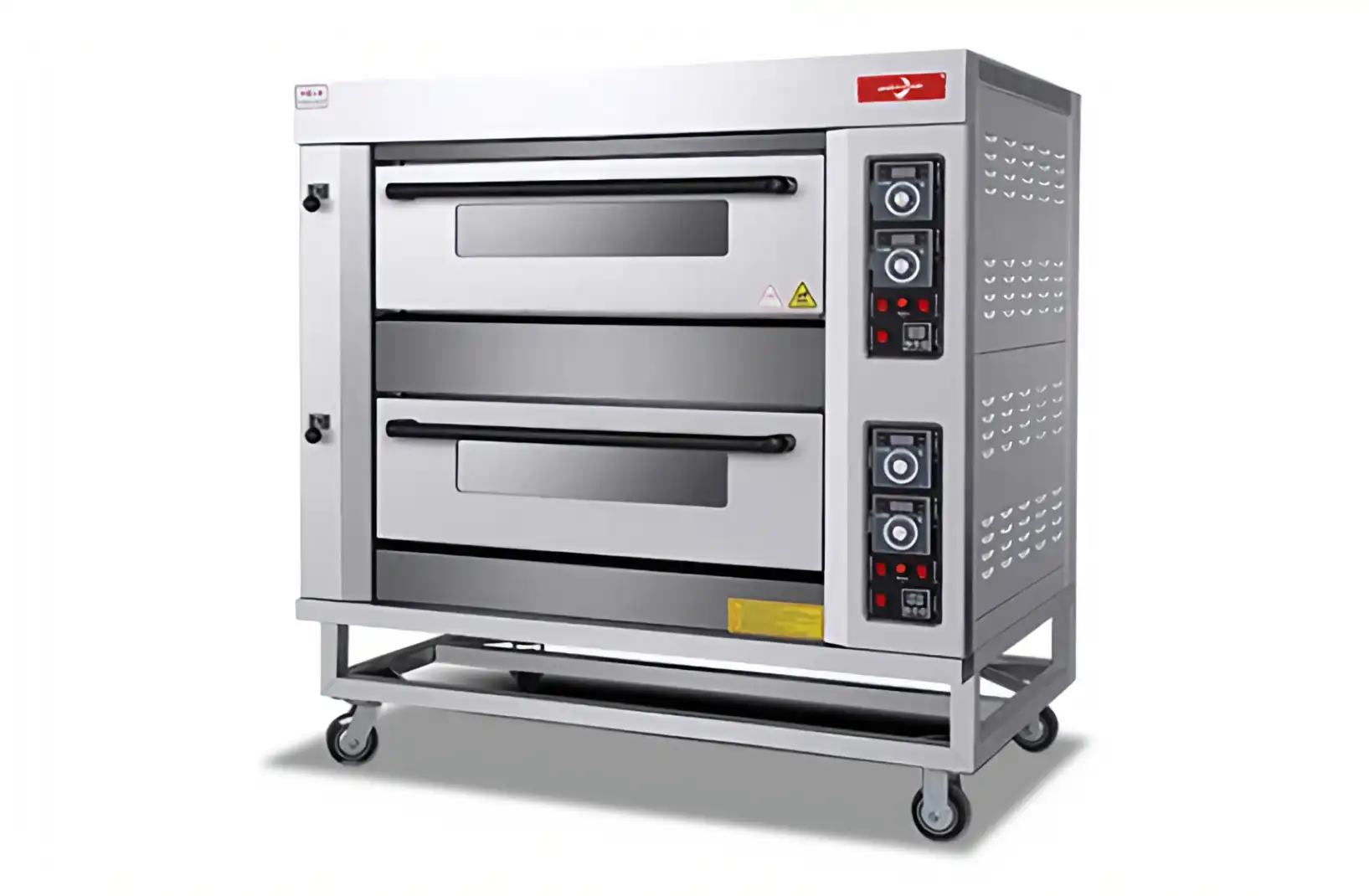
If you run a professional bakery and need consistent output of French baguettes or artisan European breads, a two deck baguette baking oven is one of the most practical investments you can make. The SL-KXQ2-4 from Undermoon is a mechanical 2-deck 4-tray gas deck oven built specifically for high-volume baguette production. It reaches temperatures up to 400℃, runs on a standard 220V supply with a gas connection, and gives each deck independent control — so your bakers can manage two different products or baking stages at the same time without guesswork.send inquiry.
What Is a Two Deck Baguette Baking Oven and How Does It Work?
Core Structure and Design
A professional deck oven for baguettes has two baking areas that are stacked on top of each other and are handled by different people. In each section, there is a refractory stone or ceramic-effect surface that soaks up heat and spreads it out evenly across the tray. Well-baked baguettes have an open crumb and a crisp ear. This is because heat moves from the bottom up.
Steam Injection and Crust Development
You need to use steam when you bake baguettes. The rim doesn't form for the first three to five minutes of baking because of the steam. This lets the dough rise to its full size. It also turns the starches on the surface into gel, which makes the finish look shiny and split. The humidity levels are kept separate on each deck by a steam pumping system. This way, each room can work on its own.
How It Differs from Single Deck Systems
A single-deck oven means that you can only bake one batch at a time, no matter how big it is. You can double the amount of food you can make in an hour with a dual-deck gas oven that doesn't take up any more room space. When commercial kitchen managers switch from a single deck to a double deck, peak-hour output usually goes up by 80% to 100%. This is very important for specialty bakeries that have to get their goods out early in the morning.
Key Factors to Consider When Choosing a Two Deck Baguette Baking Oven
There are some things that are unique to the business that you need to think about before you sign a buy order for a professional bread oven. These are the most important things:
- Temperature uniformity: If you want your baguettes to be warm when they come out of the oven, they need to be between 230°C and 250°C. The top and oven spring will not be the same color if the temperature difference across the deck is more than 8°C. A thermal distribution test report should always be asked of the supplier before a choice is made.
- Gas versus electric heating: In most markets in Southeast Asia and the Middle East,two deck baguette baking ovensare faster to fix (often in less than five minutes) and cost less to run. The digital settings on electric ovens are more reliable, but they cost more to run in large quantities for businesses.
- Mechanical versus digital controls: Mechanical buttons are less likely to break than electronic ones in places with a lot of humidity. The care of bakeries that work in places with 80% humidity or more is much better when they have a mechanical control panel.
- Construction material and insulation: Thickened stainless steel with better insulation keeps the temperature stable during back-to-back runs and doesn't rust in industrial kitchens that are always wet.
- Installation requirements: A unit that only needs a 220V power supply and a normal gas connection can be put in almost any professional kitchen without having to pay a lot of money for pricey electrical changes.
These things have a direct impact on how much work you have to do every day and how much it costs you to own something for three to five years. Most of the time, you have to pay a lot of money to readjust or deal with downtime after installation if you skip any of them during testing.
Comparing Top Two Deck Baguette Baking Ovens in the Market
MIWE, Blodgett, and Wachtel are all well-known names in the professional deck oven market. Each one is aimed at a different type of customer. In Europe, craft bakeries use the condo series from MIWE a lot. It's all about modular steam control, but it's very expensive, which can be a problem for small and medium-sized businesses. Large kitchens in North America like Blodgett's deck ovens because they last a long time. But since most of them are electric, it costs more to run them in places where gas is more popular.
For bakeries in Southeast Asia, the Middle East, or supply lines that focus on exports, the Undermoon SL-KXQ2-4 is a good middle ground. With a small 1330 × 840 × 1355 mm footprint, it fits most industrial kitchen plans and can use both LPG and natural gas. The mechanical control system doesn't break down when it gets wet. It doesn't cost much to run because it only needs 0.2 KW of electricity. The gas does most of the work.
When it comes to making baguettes, Two Deck Baguette Baking Ovens always make better crusts and hold their crumb better than conveyor ovens. Conveyor systems put speed over handmade structure, so they aren't as good for high-end breads that people buy again and again because of their quality.
Best Practices for Operating and Maintaining Two Deck Baguette Baking Ovens
Temperature Calibration and Preheat Protocol
Let it heat up for 45 to 60 minutes before making the first batch of the day. This keeps the surface of the stone at a steady temperature and stops the thermal shock that causes the first batches to bake unevenly. Make sure you keep track of the temperature at three different spots on the deck area every week. This way, you can catch drift before it damages the product.
Steam System Maintenance
If you live somewhere with hard water, minerals can build up in steam injection tubes and solenoid valves. Every four to six weeks, descale the machine to keep it from getting jammed. If it does, the steam may not be distributed evenly, which is one of the main reasons why professional bread production batches aren't always the same. Clean the system with a solution that is safe for food, and then flush it well.
Routine Cleaning and Inspection
Do not clean the stainless steel parts of the oven when it is hot. Instead, clean them when they are still warm at the end of each shift. Every three months, check the gas connections for wear, and every month, check the door seals for heat loss. These habits keep things in good shape so they don't break down during pricey repairs that are put off.
How to Procure the Best Two Deck Baguette Baking Oven for Your Bakery
Evaluate Suppliers on Technical Depth
It's a sign that a seller knows a lot about technology if they can give real thermal distribution test results and baking parameters that are tailored to a particular application, not just specification sheets. Get written proof that the temperature is the same in all four trays before you buy anything.
Confirm Customization and Localization Support
For each market, the gas setting, voltage boundaries, and panel language must be different. If the company does OEM/ODM, they can make the unit fit your utility infrastructure and the way you like to work. This makes it easier to train people after installation, which saves time and money.
Structure Your Procurement Process
For first-time buyers, the process should take between six and ten weeks. This time includes checking out the seller, making sure the specs are correct, figuring out the production wait time, shipping, and calibrating the machine on-site. Ask the supplier for a commissioning checklist, and find out if technical support is available in person or over the phone during the first few days of use. The economy of units and the scheduling of production work best for large sales and deals with distributors most of the time.
Conclusion
Your bakery will be able to make the same amount of bread every day if you get a Two Deck Baguette Baking Oven that is made for making baguettes and artisan bread. It will have the stable temperature, steam control, and batch capacity it needs. Professional bakeries need the SL-KXQ2-4 because it has small, mechanical controls that can work in real kitchens and places that are damp. The separate deck operation lets the production schedule be flexible. Getting the right tools will help you make consistent products and do less work that needs to be redone. This is true whether you run a small specialty shop or a bakery chain with several locations.
FAQ
1. How many baguettes can a two-deck gas oven produce per batch?
The usual set-up has two decks with four trays each. It can hold between 80 and 120 baguettes at a time, depending on the size and weight of the trays. With an 18- to 22-minute bake cycle, you can finish three to four batches an hour when it's busy.
2. Can this oven bake products other than baguettes?
Yes. From room temperature to 400℃, you can make sourdough cakes, buns, ciabatta, focaccia, flatbreads, and pizza bases. With separate controls for each deck, you can run different things at different temperatures at the same time.
3. Is gas or electric heating better for commercial baguette baking?
Gas heating is cheaper per unit and gets the heat back faster between batches in most business markets. Electric ovens have more accurate digital temperature controls, but when used in large quantities for business, they often cost more to run.
4. How do I handle steam system scaling in hard-water areas?
The steam intake tubes and solenoid valves should be cleaned with a food-safe descaler every four to six weeks. Every time you descale the system, you need to flush it all the way through so that the residue doesn't get into the baking chamber.
5. What voltage and gas connections does the SL-KXQ2-4 require?
The electrical parts of the unit need a standard 220V power source. Depending on your setup, the gas connection needs to be able to handle CNG or LPG. For power, you don't need a transformer or any other special tools.
Partner with Undermoon for Your Next Commercial Deck Oven Purchase
Because Undermoon has been making commercial baking equipment for 20 years, they know how to make each unit. Our SL-KXQ2-4 Two Deck Baguette Baking Oven supplier program lets you change the controls, the type of gas, and the way the trays are laid out to meet the needs of your market. We can help you whether you need one unit or a lot of them. We offer OEM/ODM services and direct expert support. Email us at undermooncn@gmail.com right away to find out more and get a good deal.
References
1. Modernist Bread — Myhrvold, N. & Migoya, F., The Cooking Lab, 2017.
2. Journal of Cereal Science — "Heat and mass transfer in bread baking," Elsevier, 2019.
3. Baking & Snack Magazine — "Deck Oven Technology for Artisan Bread Production," Sosland Publishing, 2022.
4. Food Engineering Magazine — "Commercial Oven Efficiency and Energy Use in Bakery Operations," BNP Media, 2021.
5. International Journal of Food Engineering — "Steam Injection Effects on Baguette Crust Formation," De Gruyter, 2020.
6. Bakery Business International — "Procurement Trends in Commercial Baking Equipment," William Reed Business Media, 2023.
Online Message
YOU MAY LIKE
High quality furniture manufacturer


