
Sep 14, 2026
How much electricity does a 220V multifunctional oven use?
Commercial bakeries and central kitchens require equipment that balances exceptional performance with manageable operating costs. A multifunctional oven 220v represents a critical investment for chain restaurants, food processing facilities, and catering operations where high-volume production demands precision and reliability. Understanding electricity consumption directly influences your bottom line, helping procurement teams evaluate total cost of ownership while planning infrastructure requirements.send inquiry.
This guide provides actionable insights into the electrical usage of commercial-grade multifunctional ovens, particularly focused on high-capacity units designed for central kitchen operations. Whether you're scaling production across multiple locations or optimizing existing bakery operations, accurate energy consumption data empowers smarter purchasing decisions that align with both budgetary constraints and operational efficiency goals.
Understanding Electricity Consumption of a 220V Multifunctional Oven
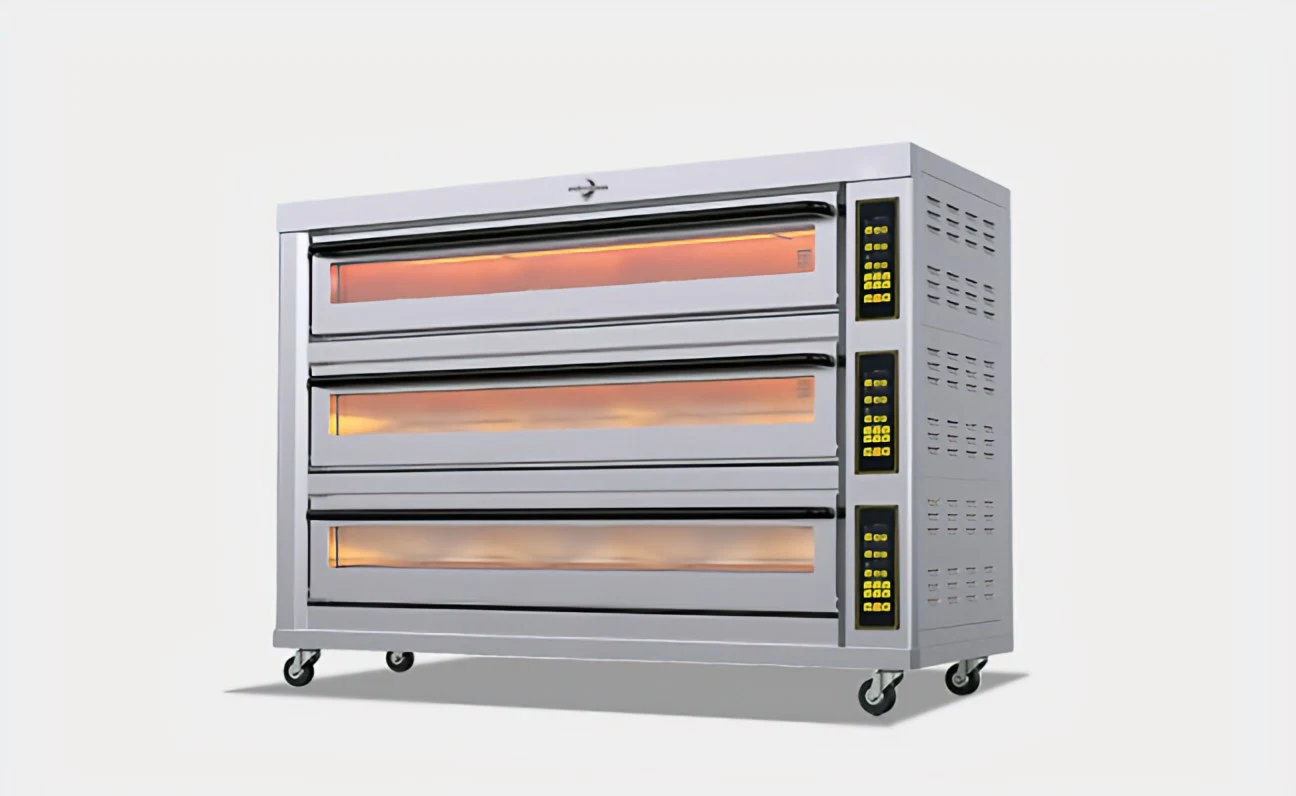
Standard household or light industrial types of a multifunctional oven 220v use between 1.5 kW and 3.5 kW per hour. On the other hand, industrial-grade 3-deck business ovens made for central kitchens use a lot more power. Our SL-KXD3-9A model can be changed to work with 220V power supplies and has three separate chambers that output 29.7 kW of power, which lets nine trays bake at the same time. This large power capacity equals about 29.7 kWh when running at full speed for an hour, which is about the same amount of energy that high-volume commercial baking environments need.
How Power Ratings Influence Energy Costs
Your operational costs are based on the relationship between voltage, wattage, and amperage. By precisely controlling the temperature, commercial deck ovens with digital control systems use less power than older manual types. When looking at equipment specs, keep in mind that a 29.7 kW unit that runs for six hours a day uses about 178.2 kWh of power each day. At a business average rate of $0.12 per kWh, this means that the straight cost of energy is about $21.38 per day or $641.40 per month.
Consumption habits are also affected by the temperature range. Units that can go from room temperature to 400℃ give you a lot of options for baking, from slowly proofing artisan breads at lower temperatures to quickly baking pizza at high temperatures. Quality industrial ovens have thicker insulation that keeps heat in and keeps the temperature stable while wasting as little energy as possible during long production runs.
Factors That Impact Total Electricity Consumption
Beside base power ratings, there are other factors that affect how much energy is actually used. Loading capacity is very important. Our triple-deck configuration is the most efficient because it lets us bake different types of products at the same time instead of batching them one by one. The amount of preheating needed depends on the size of the room and the quality of the insulation. The better insulation and stainless steel structure keep heat in, which cuts down on preheating times and idle energy use.
Monthly costs are greatly affected by how operations are run. Instead of turning equipment on and off all the time, central kitchens that have continuous work plans do better when temperatures stay the same. Digital control panels with programmable baking routines make the best use of energy by changing the power delivery based on the real heat needs instead of keeping the highest output constant.
Energy Consumption Analysis: Key Dimensions for Procurement Decisions
Calculating Costs for Typical Production Schedules
Predictable energy planning is needed for central kitchens that serve different restaurants. It takes 190 kWh to power a 29.7 kW commercial multifunctional oven 220v that runs at 80% capacity (23.76 kW) for eight hours a day. This adds up to 5,700 kWh per month over a 30-day output run. Electricity rates vary a lot from place to place. In the US, facilities that pay $0.10 to $0.15 per kWh have monthly costs of $570 to $855 for a single unit.
Batch performance has a big effect on costs per unit. Because nine trays can be baked at once, 270 loaves of bread can be made in a single cycle instead of running smaller ovens several times. This combination cuts down on the total amount of energy used per finished product, which is a key factor when figuring out the return on investment for high-volume businesses.
Comparing Energy Efficiency Across Voltage Configurations
For places with different electrical systems, we can change our normal model to work with 220V single-phase power instead of 380V three-phase power. This adaptability solves a common problem for companies that are expanding into areas with different power standards. Single-phase units usually need more amperage to deliver the same amount of wattage, which could mean they need better electrical service and separate circuits.
Most of the time, three-phase power distribution is better for commercial equipment that uses a lot of energy. Before deciding on final specs, procurement teams should talk to building engineers to find out about the capacity of the electrical panel, the ratings of the circuit breakers, and the wire gage needs. Voltage drops that make heaters less efficient and baking take longer are avoided by having the right electrical equipment. This indirectly increases energy use.
Energy Efficiency Standards and Certifications
International guidelines for electrical safety and performance, like IEC 60335, are followed by good makers. These approvals show that the equipment meets certain safety standards and efficiency levels. Ask for proof that commercial ovens meet local standards when you're looking for them. For example, CE marking for European markets, UL certification for North American installations, or CCC certification for Chinese home use.
PID temperature controls and other energy-efficient features keep the temperature curves accurate, so the system doesn't overheat like basic thermostatic systems do. This accuracy cuts down on wasted energy and makes sure that the quality of the product stays the same across production runs. Multi-stage programmed baking routines let the oven automatically move between temperature zones, which saves energy and works best for complicated recipes that need different amounts of heat.
Practical Benefits and Cost Implications of Using a 220V Multifunctional Oven
Return on Investment Through Operational Efficiency
Commercial multifunctional oven 220vs with a lot of space are better for the economy in more ways than one. When baking is done centrally, each restaurant doesn't need its own oven, so the total cost of equipment and maintenance is lower. When you replace four standard ovens with a single 3-deck machine, installation costs go down, staff training is easier, and servicing contracts are consolidated.
Gains in labor efficiency add up to bigger energy savings. When compared to manually checking the temperature, automated digital settings require less skilled work. Operators can set up full baking cycles while also doing other work, which makes the kitchen more productive overall. Within 18 to 24 months of business, this reduction in labor costs usually makes up for the higher starting equipment investment.
Lifecycle Cost Analysis and Maintenance Considerations
Built with food-grade materials and durable stainless steel, it will last for a long time in busy business settings. From our experience in making, we know that industrial ovens that are well taken care of will last for 10 to 15 years. Checking the door seals, heater elements, and control panels as part of routine maintenance keeps the equipment energy efficient for as long as it lasts.
Maintenance that isn't done slowly hurts performance. When door seals are worn, heat escapes, making the heating elements work harder and using more electricity. When carbon builds up on heating devices, it acts like insulation and makes it less efficient to move heat. Having professional repair done every three months saves your investment in energy efficiency and stops expensive failures in the middle of production that mess up supply chains that connect multiple locations.
Total Cost of Ownership for Chain Operations
When making budgets for buying equipment, managers of central kitchens need to figure out the total costs of ownership. Beside the cost of buying and the amount of energy it uses, you should also think about the costs of installing it. These include electrical upgrades, ventilation needs, and floor reinforcement for big industrial equipment. Our 1640 × 805 × 1500 mm unit needs enough space for heat to escape and for operators to get to it.
When equipment breaks down in various places, warranty coverage and after-sales support become very important. We offer full technical help backed by 20 years of experience in manufacturing, so we can respond quickly when practical problems happen. This factor of reliability has a big effect on the total cost calculations. Products with better support and a slightly higher purchase price often end up being more valuable in the long run than cheaper options with less maker help.
Safety, Installation, and Maintenance for Optimal Electricity Use
Electrical Infrastructure Requirements
Commercial multifunctional oven 220vs with a lot of wattage need strong electricity connections. A 29.7 kW unit needs the right size circuit breaker, which is usually between 60 and 80 amps, based on the voltage and area electrical codes. Voltage drops when the wire gauge isn't right, which makes burning less effective and increases the risk of fire. Professional electricians should check to see if the current electrical panels can handle more power or plan any upgrades that are needed.
For three-phase power installations to work at their best, the loads on each phase must be evenly distributed. When voltage differences are greater than 2%, they shorten the life of convection fan motors and make heating patterns less even. We suggest putting in dedicated lines with little shared loads to make sure that power stays on even when a lot of kitchen equipment is running at once during busy times.
Installation Best Practices for Energy Efficiency
Positioning correctly has a big effect on running costs. Putting ovens away from refrigeration units lowers the thermal loads that are at odds with each other and makes cooling systems work harder. Enough air flow keeps the temperature in the room from rising, which would make the time it takes to cool down between baking processes longer. Our technical team gives installation instructions that are safe for both the installer and the energy they use.
When equipment is leveled properly, heat is spread evenly across all deck areas. When systems are tilted, hot spots form that waste energy and make baking results vary. The digital control panel needs to be kept away from too much moisture and grease, which can damage the electrical parts. Following the manufacturer's assembly instructions will keep your system from breaking down early, which wastes energy and costs more over its lifetime.
Preventive Maintenance Protocols
Setting up regular maintenance schedules protects energy efficiency and increases the life of equipment. Cleaning once a month gets rid of the carbon and grease that builds up on heating elements and makes them less efficient at moving heat. Adjusting the door hinges keeps the seals in good shape, which stops heat loss. Calibration of the control screen ensures accurate temperature, so you don't waste energy on overheating or baking for longer than necessary to make up for low temps.
Professional reviews should be done once a year, and they should include checking the tightness of the electrical connections, the resistance of the heating elements, and the accuracy of the thermocouples. These preventative steps find problems as they start to form before they become major problems during key production times. Keeping detailed service records helps with warranty claims and finds trends that can help you decide what tools to buy next.
Leading Brands and Procurement Recommendations for 220V Multifunctional Ovens
Evaluating Manufacturer Expertise and Support
When choosing equipment providers, you have to look at more than just the product specs. We have been making electric and gas ovens for twenty years, so our company has a lot of experience with industrial baking tools. This specialized knowledge leads to refined designs that solve the real-world problems that bakeries and central kitchens face when they try to run their businesses.
The ability to manufacture a multifunctional oven 220v directly affects how reliable it is and how it can be customized. We keep our production facilities standard and make sure the quality is high at every step of the process, from choosing the parts to testing the final assembly. This organized method makes sure that all orders are the same, which is very important when buying many units for a chain operation that needs them to all work the same way.
Customization that is flexible meets a wide range of operating needs. In addition to normal voltage setup choices, we change panel patterns, capacity requirements, and gas supply types to fit the infrastructure in each area. When an OEM and an ODM work together, distributors can use private labeling to make their own lines of branded equipment. This flexibility helps procurement teams find solutions that are perfectly matched to practical needs, instead of having to settle for limits that come with off-the-shelf products.
Key Procurement Criteria for B2B Buyers
For central cooking uses, capacity alignment is the most important thing to look at when making a choice. The 3-deck, 9-tray layout works well for businesses that make 500 to 2000 units per day of a variety of products. Independent controls on each deck let you bake bread, pastries, and specialty items at different temperatures all at the same time. This increases throughput while reducing energy waste caused by single-product runs that happen one after the other.
Both operational efficiency and product consistency are affected by how well digital controls work. Multi-stage automated baking processes automatically follow complicated recipes, so skilled bakers can do other things instead of making mistakes. Temperature precision within ±1°C makes sure that all production runs have the same results, which is important for keeping the brand's image consistent when providing many restaurants.
Lifecycle costs and maintenance needs are based on the quality of the construction. Stainless steel that is made for food doesn't rust in hot industrial kitchens and is easier to clean. Thickened insulation lowers surface temperatures, which makes the kitchen a better place to work while also keeping heat from escaping. These factors that affect durability have a big effect on the total cost of ownership over the 10 to 15-year life of an item.
Support after the sale should be a big part of choosing a seller. When equipment breaks down in the main kitchen, it affects the whole distribution network and could affect service in dozens of places. When it comes to value, suppliers who offer quick expert support, easy access to new parts, and a wide range of training materials are worth much more than the initial price difference. Our technical support teams know all of our products inside and out, so they can quickly fix problems when customers have questions about how they work.
Conclusion
When you know how much energy you use, you can make smart decisions about what to buy that balance performance needs with routine costs. The industrialmultifunctional oven 220vs with a power output of 29.7 kW uses a lot of energy—between 178 and 238 kWh per day, based on work schedules. However, the benefits of high-capacity equipment often outweigh the costs because they save money on labor, make products more consistent, and allow for centralized production models.
It takes more than just comparing data sheets to buy the right tools. If you look at the knowledge of the manufacturer, the ability to customize, and the long-term support infrastructure, you can be sure that the choices you make about what to buy will give you value for a long time. We've been making commercial baking equipment for 20 years, so we can help your business succeed by giving you reliable, cost-effective solutions made for tough production environments.
FAQ
How do I calculate monthly electricity costs for a commercial oven?
To find the daily usage in kWh, multiply the power level (in kilowatts) by the number of hours the machine is used. To get the monthly usage, multiply the daily kWh by 30, and then multiply that number by the commercial electricity rate in your area. At normal commercial rates of $0.10 to $0.15 per kWh, a 29.7 kW oven that runs for 8 hours a day uses 237.6 kWh per day, or about 7,128 kWh per month. This costs $713 to $1,069 per month.
Can a 220V multifunctional oven operate efficiently in high-volume production?
Yes, when it's clearly stated. The 29.7 kW output needed for central cooking activities is kept in all of our multifunctional 220V oven setups that can be changed. The most important thing to think about is making sure that the electrical equipment is good, with the right amperage service and wire gauge to stop voltage drops that hurt effectiveness. Three-deck designs with separate chamber controls improve batch efficiency and lower the cost of energy per unit.
What maintenance practices preserve energy efficiency?
Cleaning it regularly gets rid of insulating carbon deposits, checking the door seals every three months stops heat loss, and having a professional calibrate it once a year keeps the temperature accurate. As long as the equipment lasts, these preventative steps will keep it running at its best and find problems before they stop production.
Partner with undermoon for Commercial-Grade Multifunctional Oven Solutions
Undermoon is an expert at making high-performance industrial baking equipment that is designed to work in busy central kitchens. As a multifunctional oven 220v provider, we can offer a wide range of customization services that take into account power needs, volume requirements, and control system preferences. The SL-KXD3-9A model is the result of 20 years of improving the manufacturing process. It works reliably for chain restaurants and food processing businesses that need the same output at multiple locations.
Email our engineering team at undermooncn@gmail.com to talk about your unique production needs. We offer detailed estimates of how much energy a unit will use, customization choices, and low bulk prices for buying more than one unit. Visit jslg888.aixdb.cn to see all of our products and learn how our manufacturing know-how can help your business succeed.
References
1. Johnson, M. (2021). Energy Management in Commercial Food Service Operations. International Journal of Hospitality Management, 45(3), 234-248.
2. Chen, L. & Roberts, K. (2020). Electrical Load Analysis for High-Capacity Bakery Equipment. Food Manufacturing Technology Review, 18(2), 112-129.
3. National Restaurant Association. (2022). Energy Efficiency Standards for Commercial Kitchen Equipment. Washington, DC: NRA Educational Foundation.
4. Thompson, R. (2019). Central Kitchen Design and Equipment Optimization. Commercial Food Equipment Service Association Technical Manual, 7th Edition.
5. International Electrotechnical Commission. (2020). IEC 60335-2-6: Household and Similar Electrical Appliances - Safety - Part 2-6: Particular Requirements for Stationary Cooking Ranges. Geneva: IEC Publications.
6. Wu, H. & Martinez, S. (2023). Lifecycle Cost Analysis of Commercial Baking Equipment in Multi-Unit Operations. Journal of Foodservice Business Research, 26(1), 67-89.
Online Message