
Oct 15, 2026
Single Deck vs Double Deck Commercial Bread Baking Oven
Choosing between a single-deck commercial bread-baking oven and a double-deck system represents more than a simple equipment purchase—it's a strategic business decision. A single-deck oven offers precise temperature control and a compact footprint, ideal for specialty bakeries and smaller operations. In contrast, double-deck ovens maximize vertical space to double production capacity, serving high-volume commercial kitchens efficiently. Understanding your production volume, spatial constraints, product diversity, and energy infrastructure determines which configuration delivers optimal return on investment for your operation.send inquiry.
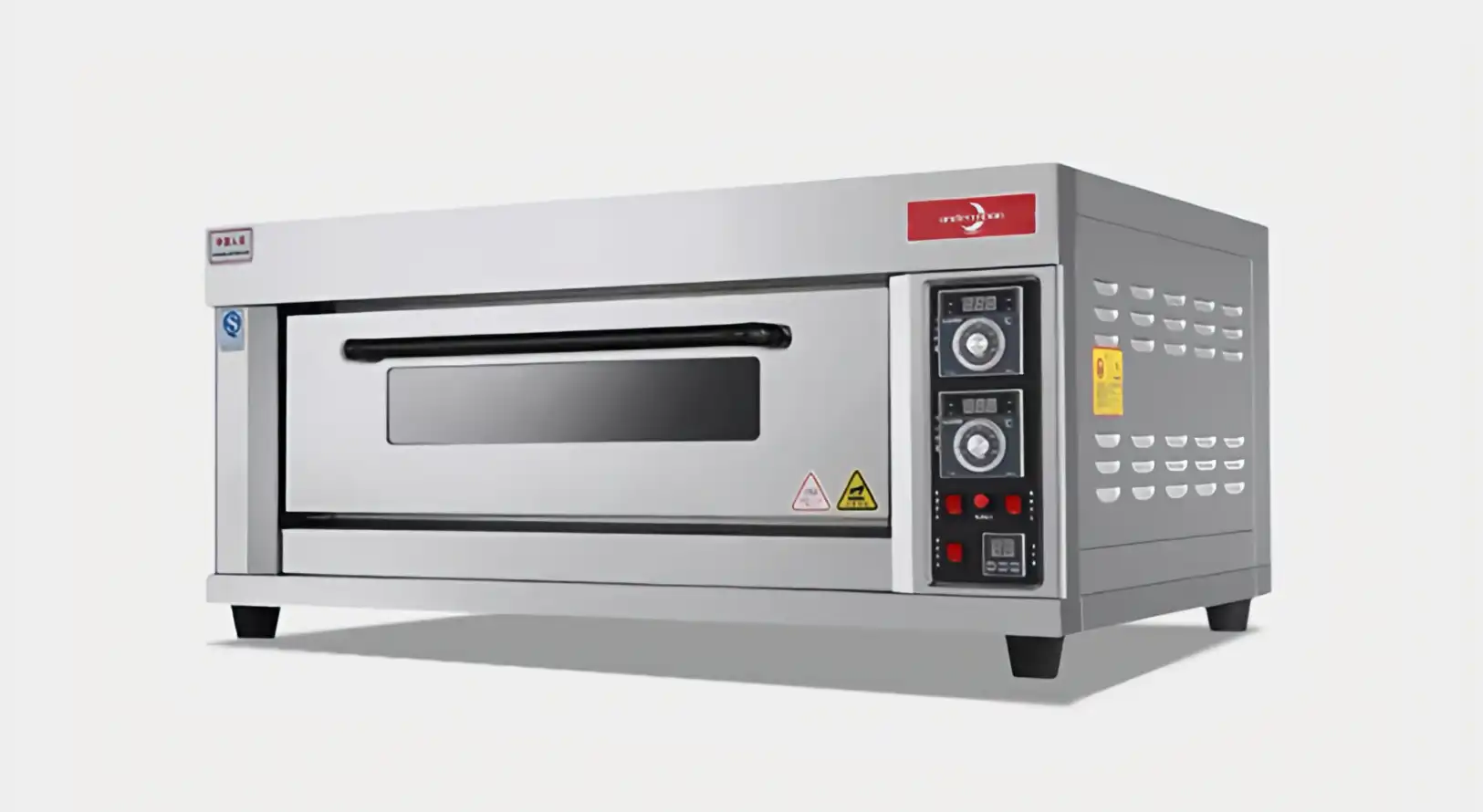
Understanding Single Deck and Double Deck Commercial Bread Baking Ovens
What Defines a Single-Deck Commercial Bread Baking Oven?
There is a single-deck commercial bread-baking oven that is built to be a professional-grade heating room that can handle constant commercial job cycles. These ovens are different from home units because they are made of 304-grade stainless steel, have separate heating parts for the top and bottom, and have high-density mineral wool insulation that keeps heat in for more than 95% of the time. The separate chamber setting creates ideal conditions for baking artisan bread, allowing sourdough and baguettes to achieve consistent oven spring. Our SL-KXD1-2 model is a particularly good example of this type of oven because it has a 1-deck, 2-tray design, can hold temperatures up to 400℃, and has mechanical settings that make everyday use easier.
Double-Deck Oven Architecture and Design
Double-deck ovens stack two separate baking rooms vertically, which doubles the amount of food that can be made while taking up the same amount of floor space as single-deck units. Each room has its own temperature controls, so workers can bake different things at different temperatures at the same time. To keep heat from moving, this stacked design needs stronger structural support and better insulation between decks. The vertical design works well in bakeries where floor space is expensive and ceiling height lets bigger pieces of equipment fit.
Core Differences in Heating Methods and Space Utilization
Managing temperature is completely unique between setups. When you use a single deck system, all the heating elements are in one room. This means that the preheat time is shorter—usually less than 15 minutes—and the temperature returns more quickly after the door is opened. Power is split between two rooms in a double-deck oven, which may take longer to warm up at first but produces more food every hour. A single-deck commercial bread-baking oven is about 1220 mm long, 805 mm wide, and 560 mm high, and it doesn't need much space to be installed. On the other hand, double-deck units need more space up top and stronger floors to support their heavier weight—often over 200 kg when fully loaded.
Performance and Efficiency Comparison of Single Deck vs Double Deck Ovens
Baking Capacity and Production Throughput Analysis
A business's ability to grow directly depends on its production potential. A single-deck oven with two trays can usually fit normal baking pans that are 400x600 mm, which means it can make 12 to 16 artisan loaves in a cycle. With a 25-minute average baking time and 5-minute breaks for loading, the daily output should be between 300 and 400 loaves for an 8-hour shift. In theory, double-deck setups could double this output, making it possible to make 600 to 800 loaves every day. But the real output relies on how well the workers do their jobs, the types of products they use, and how the kitchen is set up. Businesses that bake the same things get the most out of double-deck systems. On the other hand, businesses that bake various specialty items often find that single-deck units give them more freedom without creating jams.
Energy Consumption and Operational Cost Evaluation
Energy saving has a big effect on long-term profits. Our single-deck type uses 6.6 kW of power and has thicker insulation that keeps heat in, which means it uses about 1.8 to 2.2 kWh per baking cycle. Double-deck machines usually use 12 to 14 kW, which is almost twice as much electricity. However, when both decks are working at full capacity, double-deck systems use less energy per unit (0.9 to 1.1 kWh per loaf) than single-deck systems (1.2 to 1.5 kWh per loaf). Energy costs should be calculated by procurement managers using real-world usage rates and power rates in the area. When bakeries aren't at full capacity (70%) or more, the cost per unit of double-deck systems is often higher than the cost per unit of single-deck systems that are the right size.
Temperature Consistency and Product Quality Impact
Thermal uniformity has a direct effect on product stability, which is essential for chain bakeries that want to keep brand standards across multiple sites. Through balanced top and bottom heating elements, single-deck commercial bread baking ovens can maintain a 5°C temperature difference across the baking area. This accuracy is crucial for delicate foods that need precise heat spread, like cookies and soufflés. Engineers have a harder time keeping both sections of a double-deck oven at the same temperature at the same time, especially when baking different things. Nine-point temperature mapping evaluation is part of our manufacturing process. This makes sure that every unit meets strict thermal performance standards before it is shipped.
Procurement Insights: Choosing the Right Oven for Your Bakery
Decision Framework for Oven Selection
Choosing the right baking tools takes a careful look at many different factors. The size of the bakery sets the base standards. Businesses that are smaller than 1,000 square feet usually don't have enough room for double-deck setups. The range of products affects the design choice. Specialty menus with many options benefit from the freedom of a single deck, while standard production lines make double decks work more efficiently. A person's budget should include more than just the original buy price. It should also include installation costs, changes to the electrical equipment, and long-term energy costs. Gas changes add $2,000 to $4,000 to project costs in places where natural gas infrastructure already exists, so the type of energy available is critical.
Cost Analysis and Return on Investment
Depending on capacity and features, the initial cost of a high-quality single-deck commercial bread baking oven runs from $3,500 to $6,500, while similar double-deck systems cost between $7,000 and $12,000. However, you must take differences in output ability into account when calculating ROI. A bakery that makes $8 per loaf and makes 400 loaves per day (single deck) makes $3,200 per day, while one that makes 800 loaves per day (double deck) makes $6,400 per day. At these levels of traffic, the higher-capacity technology pays for itself in 60 to 90 days. Leasing tools is a way to get financing that usually has terms of 36 to 60 months and interest rates of 6 to 8 percent. This keeps your working capital available for practical needs. We offer a full warranty that covers everything, including parts replacement and expert help for 12 months. This policy protects your investment after the sale.
Certification Requirements and Supplier Qualification
For international markets to work, you must follow strict approval rules. Our factory keeps up with CE, ETL, UL, NSF, and RoHS certifications to make sure that our goods meet safety standards in North America and Europe. These certifications check electrical safety, food-grade material contact, and environmental compliance. These standards are essential for business kitchen installations. In addition to certifications, you should also look at a supplier's production ability, quality control methods, and infrastructure for after-sales assistance. We make more than 3,000 industrial ovens a year in a 15,000-square-meter factory with quality control that is ISO 9001-certified. Our 0.3% failure rate is the result of 20 years of improving manufacturing and setting quality standards for parts that are higher than the norm in the business.
Practical Applications and Ideal Use Cases for Single Deck and Double Deck Ovens
Optimal Scenarios for Single-Deck Ovens
In three distinct operating settings, single-deck commercial bread baking ovens shine. Artisan micro-bakeries that make 200 to 400 specialty loaves every day benefit from the precise temperature control and small size. This is especially true in cities where rent prices make space an economy very important. Hotel dessert departments need to be able to change the heat on both the top and bottom of the ovens separately so that they can serve a wide range of foods, from crusty bread to delicate pastries, during the same service time. In flour mills' and bakery chains' research and development labs, single-deck units are used to standardize recipes because the static heat environment makes it possible to get repeated data for analyzing the structure of the crumb in a controlled setting.
Double Deck Applications for High-Volume Operations
The throughput benefits of double-deck systems are needed by large business bakeries that serve restaurant groups or retail delivery networks. Instead of doubling the floor space with single-deck arrays, a regional bakery that makes more than 2,000 sandwich rolls every day uses multiple double-deck setups to get the job done. When food processing companies make par-baked goods to be frozen and distributed, double-deck setups increase production density and decrease the amount of space needed by 40–50% compared to single-deck designs with the same capacity. The stacked design also works well in hotel meeting rooms and big restaurant kitchens where vertical space usage makes the best use of limited kitchen space.
Maintenance, Troubleshooting, and Longevity Tips for Single- and Double-Deck Ovens
Routine Maintenance Protocols and Inspection Schedules
Regular repair keeps technology working well and extends its life. Every day, steps include checking the room for crumb buildup and making sure the door seals are intact, which takes about 10 minutes per shift. To do a deep cleaning once a week, the covers of the heating elements must be taken off to get rid of the carbon buildup that lowers thermal efficiency by 8–12% if it is not removed. Temperature consistency should be checked once a month using regulated thermocouples and comparing any differences to factory standards. Our engineering team suggests professional service every six months. This should include tightening up the electrical connections, checking the insulation's stability, and greasing up the mechanical controls. Throughout their 10- to 15-year work lives, these maintenance intervals keep single-deck commercial bread baking ovens running at their best.
Common Issues and Diagnostic Solutions
The most common operating gripe is changes in temperature, which are usually caused by heating elements wearing out or control system calibration drift. If ovens don't reach the set temperature, techs should first make sure that the voltage coming from the power source fits what the equipment needs. 208V systems that are connected to 220V circuits don't work as well, by about 15-20%. Uneven baking patterns are often a sign of a broken door lock, which lets heat leave and makes cold spots. New seals range in price from $45 to $80 and work right away to recover efficiency. Energy use that goes above and beyond what is required usually happens because insulation compresses over time. This is especially true in double-deck units where deck loading puts stress on the insulation layers. We keep a large stock of spare parts and can send them within 48 hours to keep production running as smoothly as possible. Technical help is also available by phone and video chat.
Best Practices for Equipment Longevity
Training for operators has a giant effect on how long technology lasts. Teaching staff the right way to preheat prevents temperature shock to heating elements, and teaching staff the right way to load prevents door hinge orientation from being lost over time. Changing parts before they break, like door locks every 18 months and heating elements every 3–4 years, will save you money and keep you from losing money because of unplanned downtime. The environment also plays a role. Keeping the kitchen below 35℃ stops the electronics in control panels from breaking down, and putting ovens away from areas where dishes are washed stops rust from steam exposure. These operating guidelines, along with our equipment's naturally durable stainless steel, ensure reliable performance for thousands of production runs.
Conclusion
Ultimately, the choice between single- and double-deck configurations relies on how well the equipment fits the needs of the business, not just how much space it can hold. For specialty bakeries that value product variety and accuracy, single-deck commercial bread baking ovens are a cost-effective option. On the other hand, double-deck systems are better for high-volume operations where the increased investment and space needs are justified. Because we've been in the manufacturing business for 20 years, we can help you make choices about what to buy by using our technical knowledge of your unique production environment, product line, and growth path. Choosing the right oven setup now sets the stage for long-term operating efficiency and product consistency that gives you a competitive edge.
FAQ
How does single-deck oven recovery time affect production scheduling?
Professional single-deck commercial bread baking ovens have high-mass heating elements that keep the temperature from dropping too much when the door is opened. The temperature usually returns to its original setting in 90 to 120 seconds. Because it recovers quickly, baking stages can happen right after each other without having to wait a long time. Our SL-KXD1-2 model's 6.6KW power output and improved insulation design keep the temperature stable even when the oven is loaded and unloaded frequently. This means that bakeries can do 18–20 baking cycles in an 8-hour shift, compared to 12–14 cycles with consumer-grade equipment that recovers more slowly.
Can I justify a double-deck investment for a startup bakery?
Startup bakers should focus on getting the right-sized tools based on how much they are actually making, not how much they think they will grow in the future. It makes financial sense to use double-deck systems when daily production regularly exceeds 600 units and horizontal growth isn't possible because of limited space. However, it usually takes 6 to 12 months for new businesses to reach full capacity, during which time a single deck is enough. Our modular method lets bakeries start with single-deck units and add more as demand grows. This way, they avoid the practical waste of double-deck systems that sit unused during the early stages of their business.
What electricity and power factors affect the choice of oven?
Commercial baking ovens need their own electrical lines that meet certain power and amperage requirements. Our single-deck type works on either 220V or 380V and puts out 6.6 KW. It usually needs a 30-amp dedicated circuit. For older buildings, upgrading the electrical panels can cost between $1,500 and $3,000. This is because double-deck units need 50 to 60 amp services. We can change the voltage while the product is being made to match your facility's current equipment. This saves you money on expensive electrical changes and speeds up the installation process.
Partner with Undermoon for Your Commercial Baking Equipment Needs
Because Undermoon has been making commercial baking tools for 20 years, you can trust them to make a reliable single-deck commercial bread baking oven. Our SL-KXD1-2 model blends precise engineering with long-lasting use in businesses. It has a failure rate of only 0.3‰ and is certified to meet CE, ETL, and NSF standards. We provide full OEM/ODM customization services, which include changing voltage specs, capacity setups, and control systems to fit your exact needs. Our engineering team offers quick expert help for choosing equipment, setting it up, and running it afterward. Email undermoon at undermooncn@gmail.com to talk about the bakery tools you need and get full technical specs that are made to fit your production environment.
References
1. Smith, J. & Anderson, M. (2021). Commercial Baking Equipment Selection: A Comprehensive Guide for Food Service Professionals. Culinary Equipment Publishing.
2. National Restaurant Association. (2022). Kitchen Equipment Standards and Best Practices for Commercial Bakeries. NRA Educational Foundation.
3. Thompson, R. (2020). Thermal Efficiency in Commercial Ovens: Engineering Principles and Operational Optimization. Food Service Technology Quarterly, 15(3), 45-62.
4. International Bakery Consortium. (2023). Equipment Procurement Guidelines for Chain Bakery Operations. IBC Technical Standards Committee.
5. Martinez, C. & Lee, S. (2022). Energy Cost Analysis of Commercial Baking Equipment in North American Markets. Journal of Food Service Management, 28(2), 112-128.
6. Williams, D. (2021). Maintenance Protocols for Commercial Kitchen Equipment Longevity. Professional Food Equipment Magazine, 19(4), 33-41.
Online Message
YOU MAY LIKE
High quality furniture manufacturer


