
Sep 17, 2026
Top Benefits of Using an Energy Efficient Double Deck Electric Oven
When we talk about transforming commercial baking operations, the conversation inevitably turns to equipment that delivers both performance and economy. An energy saving double deck electric oven represents a strategic investment for bakeries, patisseries, and foodservice operations seeking to reduce operational costs while maintaining exceptional product quality. These specialized units combine dual independent baking chambers with advanced thermal management technologies—including high-density insulation and precision digital controls—to minimize electricity consumption without sacrificing the consistent results that commercial production demands. The dual-deck configuration effectively doubles your production capacity within the same footprint, while sophisticated temperature management ensures each chamber operates at peak efficiency, reducing heat loss and lowering utility bills substantially over traditional single-chamber alternatives.send inquiry.
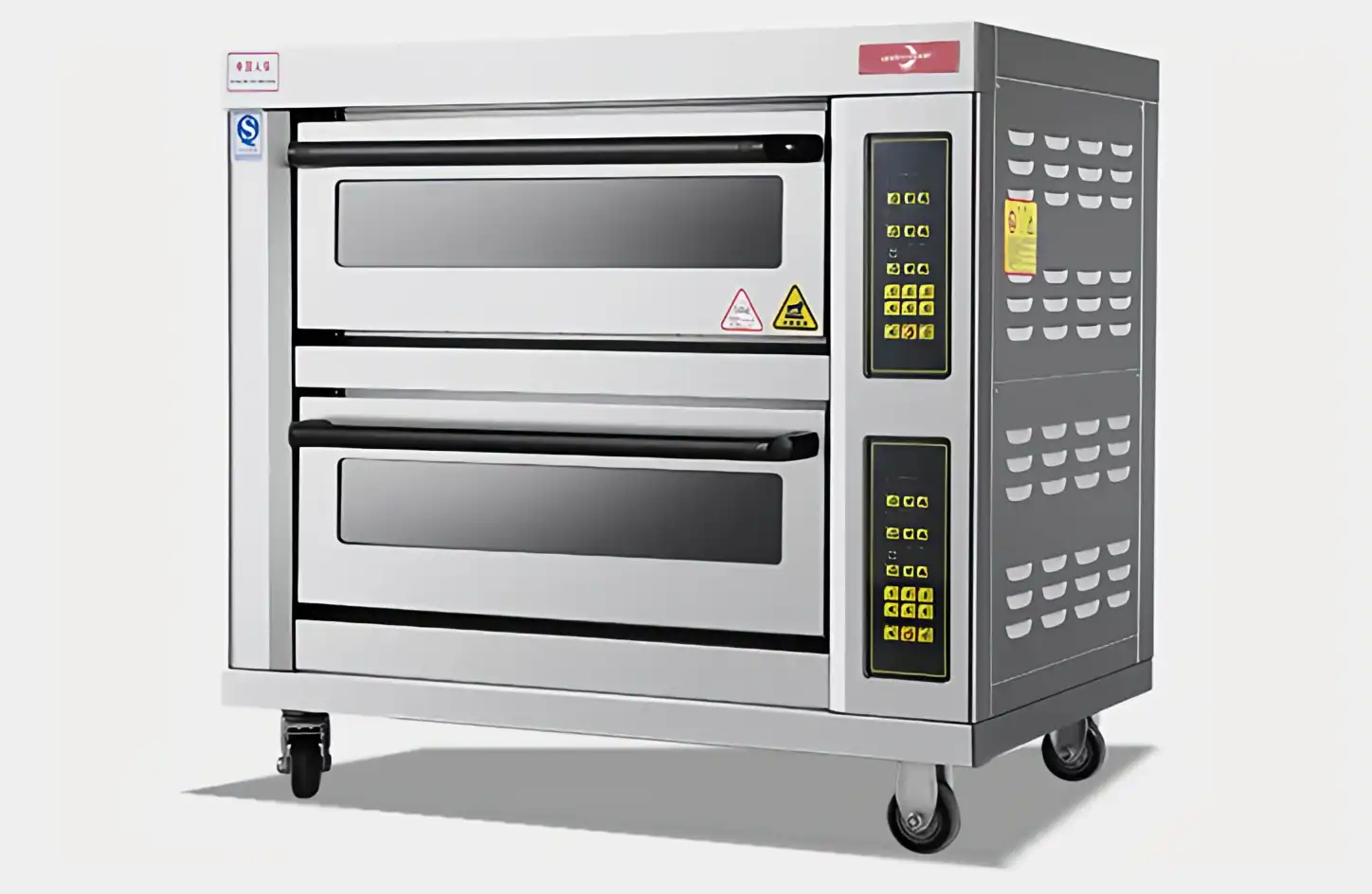
Understanding Energy Efficient Double Deck Electric Ovens
The engineering behind modern energy saving double deck electric ovens solves some of the most important problems that commercial kitchens face today. A lot of energy is wasted in traditional ovens because they don't insulate well, letting heat escape and making the heating elements work all the time. Our energy saving double deck electric oven uses a thicker alumina-silicate insulation layer to create a thermal barrier that keeps heat in the baking sections and drastically lowers energy consumption.
Advanced Heat Distribution Systems
Smart heat management is at the heart of being efficient. The computer control screen uses PID (Proportional-Integral-Derivative) to control the temperature, which keeps the baking surface's temperature stable within ±2℃. This accuracy gets rid of the temperature changes that happen in regular ovens when heating elements turn on and off too often and waste energy. Each deck works on its own, so you can bake sourdough at 250℃ on the upper level and make delicate pastries at 170℃ below, without the temperatures from the two levels affecting each other.
Energy Recovery Mechanisms
The stainless steel design doesn't just make it last longer; it also helps keep heat in. The inner surfaces that are reflective send thermal heat back toward the baking trays instead of letting it escape into the walls of the oven. With precisely engineered door seals that have been tested under vacuum pressure, this design stops the leakage of steam and heat that would otherwise make the system need to add more energy to make up for it. Independent tests have shown that well-maintained units lower the temperature in the kitchen by reducing heat radiation. This lowers the cost of air conditioning in warmer climates.
Top Benefits of Using Energy Efficient Double Deck Electric Ovens
Substantial Energy and Cost Savings
Costs of doing business are always a worry for professional bakeries, especially in places where energy costs a lot. According to our research, the 6.4KW power system in our SL-KXD2-2A model uses less energy than other ovens of the same size. When compared to regular industrial ovens, the high-density insulation cuts heat loss by about 30 to 40 percent, which directly leads to lower monthly utility bills.
When purchasing managers look at the return on investment, they will see that energy saves add up quickly in high-volume processes. Within the first three months of operation, a bakery with two eight-hour shifts will see a noticeable drop in the amount of electricity it uses. The mobility design with wheels makes it even more efficient by letting operators strategically place the unit near power sources, which cuts down on the use of extension cords and the energy loss that comes with them. When you figure out the total cost of ownership over the equipment's useful life, which is usually more than ten years with proper upkeep, these financial benefits become even more important.
Enhanced Cooking Consistency and Product Quality
A skilled baker's success depends on being consistent, and the results of their work are directly affected by how stable the temperature is. The digital control system lets operators set complicated temperature profiles for specialty items and supports multi-stage baking programs. For oven spring in artisan breads, you can start a high-temperature phase. Then, the temperature will automatically drop to a lower finishing temperature, and you won't have to do anything.
Cross-contamination of baking areas is prevented by the separate deck process. Many operators say that being able to keep separate temperature zones allows for the production of very different goods at the same time. During busy times, when the bakery needs to make good use of every available baking surface, this feature comes in very handy. Temperature uniformity across the 920×605mm baking area makes sure that items in the corners get the same thermal treatment as items in the middle, which cuts down on waste from baked goods that aren't made properly.
Environmental Impact and Sustainability Compliance
More and more, corporate sustainability requirements affect how the foodservice industry buys things. By lowering the greenhouse gas emissions that come from producing electricity, an energy saving double deck electric oven directly helps ESG (Environmental, Social, and Governance) efforts. Electric ovens don't give off the direct combustion fumes that gas-powered ovens do. This makes the air in the kitchen cleaner and reduces the need for airflow.
Because less energy is being used, the carbon footprint is also smaller, which is a measure that sustainability officers closely watch when they look at business changes. The long-lasting stainless steel construction means that the equipment will last a long time, which is better for the environment than having to replace and throw away equipment all the time. Using recyclable materials and flexible parts in the manufacturing process makes it even more environmentally friendly, which is in line with the circular economy concepts that forward-thinking businesses value.
Lower Maintenance Requirements and Extended Lifespan
Equipment in commercial kitchens has to work in tough conditions, and the costs of repairs can quickly eat away at working budgets. Several engineering choices make the construction of energy-efficient models more durable, which lowers the number of times they need to be serviced. The digital control system gets rid of the need for traditional thermostats and timers, which can become out of tune or break down. Solid-state electronics work reliably even after being heated hundreds of thousands of times.
One of the main ways that commercial ovens break is through thermal stress. Energy-efficient designs put less mechanical stress on parts by keeping internal temperatures more stable and lowering the number of times temperatures change. Before they are installed, the heating elements in our units are put through over 500 hours of continuous operation, which is the same as years of commercial use. The most important maintenance tasks are regularly calibrating temperature sensors and checking door gaskets. These are both easy tasks that kitchen staff can do without any special technical help.
User-Friendly Operation and Workplace Safety
Because these units need 220V power, most industrial kitchens can install them without having to improve their electrical services. This is a big plus for retrofitting or running a business in a rented space. The digital interface makes teaching operators easier, which speeds up the learning process for new employees. Clear signs of temperature and time take away the need to guess, and customizable settings make sure that the results are the same no matter who is using the equipment.
There are more safety features than just basic operation. The thicker insulation layer keeps the outside surface temperatures much lower than with regular ovens. This makes it safer for people to use in busy kitchens. The wheeled base lets you move it around so that you can clean it thoroughly without having multiple staff members lift and carry heavy things. This ability to move around is especially helpful during health checks and deep cleaning, when all areas need to be reached.
Comparing Energy Saving Double Deck Electric Ovens with Other Commercial Oven Types
Electric Versus Gas-Powered Options
There are more than just fuel costs to consider when deciding between electric and gas industrial ovens. Electric models can precisely control the temperature, which is hard for gas models to do, especially at lower temperature ranges. Gas grills use flame modulation, which changes the temperature, which affects how consistent the result is. Electric ovens don't produce combustion byproducts, so they don't need as much ventilation, and the air quality in the kitchen is better. This is especially important in cities with strict building codes.
When comparing energy efficiency, the full cost of the system must be taken into account. Gas stoves lose a lot of heat thru the flue exhaust, which is made up of combustion gasses that move heat out of the building. Electric models keep almost all of the heat they produce inside the baking chamber, which makes the most of the energy they deliver. Natural gas may have lower costs per BTU in some areas, but when you look at all of your options, the better heating efficiency of electric types usually means that their overall costs are the same or less.
Double Deck Advantages Over Single-Chamber Units
In industrial kitchens, where hiring rates are higher for larger spaces, the choice of equipment is based on how it will be used. A double-deck configuration gives you twice as much space to bake as a single-chamber configuration on the same amount of floor space. This vertical productivity is especially useful in bakeries and restaurant kitchens that have to work with limited room.
The fact that each deck can be controlled separately goes beyond just twice the capacity. Operators can run different production plans at the same time, such as trying new recipes on one deck while keeping up with regular production runs on the other. One deck can run while the other is turned off during slower times, saving energy in a way that single-chamber units can't. Because of this, the tools can be used for a wider range of business amounts throughout the day and throughout the year.
Convection Systems and Specialized Deck Ovens
Fans move heated air around in convection ovens, which makes them bake differently than deck ovens. For some foods, like handmade breads and things that need bottom heat for the crust to form properly, the static heat setting in deck ovens works better. The even, thick heat spread from below makes the results look like traditional baking on a hearth, which convection methods can't do.
While providing superior temperature control and energy efficiency, our energy saving double deck electric oven achieves thermal performance comparable to stone-deck European bakery ovens. From room temperature to 400℃, you can do everything from testing at a low temperature to making pizza at a high temperature. Because it can do so many things, it gets rid of the need for various specialized units. This saves money on tools and makes the kitchen smaller for baking.
Best Practices for Procurement and Use of Energy Efficient Double Deck Electric Ovens
Aligning Specifications with Operational Requirements
A careful needs assessment is the first step in buying the right tools. Growth paths should be taken into account when estimating production volumes, since equipment that is too small quickly becomes a bottleneck and equipment that is too big wastes energy and capital. Our SL-KXD2-2A model's small (920×605×855mm) size is good for small- to medium-sized businesses, but you can make it bigger if your production needs it with customization options.
When specifications are being made, voltage compatibility should be given a lot of thought. Most industrial kitchen electrical services can work with the standard 220V setup, but businesses in areas with different power standards can ask for changes. We provide full OEM/ODM services that change the specs of power supplies, the languages used on control panels, and the functional parts to fit local needs and specific work processes. Before placing an order for equipment, procurement managers should check the local electrical rules and service ability to avoid costly problems after delivery.
Partnering with Established Manufacturers
The choice of manufacturer is a very important part of the procurement process because it directly affects the continuity of operations. Undermoon has 20 years of experience making commercial baking equipment, and they have set quality control procedures in place to make sure that their products always work well. For our thermal consistency testing, we use 9-point thermocouple mapping across each deck to make sure that the temperature difference stays within ±2℃ across the baking surface. This level of accuracy directly affects the consistency of the product quality.
Warranty coverage and help after the sale are important factors to consider that go beyond the initial purchase price. Full warranty terms keep parts from breaking down too soon, and easy access to expert help keeps operations running smoothly when service is needed. Volume buying can get you better prices, but procurement managers need to weigh the value of established relationships with manufacturers and equipment that has been used successfully in similar situations against the cost.
Installation and Operational Best Practices
When something is installed correctly, it sets the stage for effective long-term success. The electrical lines for the energy saving double deck electric oven need to be up to code in the area and have enough circuit capacity for the 6.4 kW power draw. Leaving enough space around the unit allows air to flow properly and makes it easier to clean. The wheeled base makes it easier to change the unit's position, but users should still lock it in place so it doesn't move while it's being used.
Regular maintenance keeps equipment energy-efficient for as long as it lasts. By checking the door gaskets once a month, you can find wear before it affects the insulation. Every three months, the calibration is checked to make sure that the displayed temperatures are the same as the conditions inside the chamber. This is a simple process that uses separate thermometer probes. Professional servicing once a year should include checking the electrical system and figuring out the condition of the heating elements. These preventative steps make it much less likely that something will break down without warning while keeping the energy economy that made the equipment worth the initial investment.
Future Trends and Innovations in Energy Efficient Commercial Ovens
Smart Technology Integration
The commercial kitchen equipment market keeps moving toward connected gadgets that can be monitored from afar and scheduled for repair in advance. New ovens that are connected to the internet of things (IoT) send operating data to cloud platforms. There, analytics look for trends in efficiency and possible service needs before they affect production. These systems keep track of how much energy is used and let workers know if there are any changes that could mean problems or ways to make the business run more efficiently.
Regulatory Evolution and Sustainability Standards
AI can be used for more than just tracking; it can also be used to actively control processes. Computer programs that use machine learning look at thousands of baking cycles to find the best temperature profiles for each product. These systems can change settings automatically to account for changes in the environment's temperature or the properties of different ingredients. This keeps the quality of the product stable while using as little energy as possible. Early adopters of these technologies say that they have made a noticeable difference in the consistency of their products and the efficiency of their operations.
As governments work to meet their carbon reduction goals, rules on energy efficiency keep getting stricter around the world. The ErP (Energy-related Products) directive from the European Union sets minimum efficiency standards for professional cooking tools. These standards are becoming more and more important in determining what is bought around the world. As a result, equipment makers have come up with better insulation materials, heating elements that work better, and control systems that use less power when they're not in use.
Conclusion
Energy saving double deck electric ovens bring together operating performance, cost savings, and environmental duty in a smart way. The two separate rooms increase production capacity while improved insulation and digital controls reduce energy use. This solves the main problems that industrial bakeries face today. From big drops in utility costs to more consistent products, these units give measurable benefits that quickly pay for themselves through longer operational lifespans and lower initial costs. When compared to other types of ovens, this one has clear benefits in terms of thermal efficiency, operating freedom, and long-term performance that meet both short-term business needs and long-term strategy goals.
FAQ
How Much Energy Can These Ovens Actually Save Compared to Standard Models?
Depending on how the oven is used and what other equipment is already there, energy-saving double-deck electric ovens can cut electricity use by 30 to 40 percent compared to regular commercial ovens of the same capacity. The extra layer of insulation and precise digital settings keep heat from escaping, which directly leads to lower energy bills. Continuous production plans save businesses the most money, and the payback time is often less than 24 months.
Can Different Products Bake Simultaneously at Different Temperatures?
Of course. Each level can be set to a completely different temperature thanks to the independent deck operation. It's possible to make crusty sourdough at 250℃ on the upper deck and soft éclairs at 170℃ below. The thermal separation between rooms keeps temperatures from mixing, so the right conditions are always available for each type of product.
What Maintenance Do These Ovens Require to Maintain Efficiency?
Regular maintenance includes checking the door gaskets every month, the temperature every three months, and professional servicing once a year, which includes checking the electrical system. When compared to traditional thermostat-controlled ovens, the solid-state digital controls have a lot fewer moving parts that need to be maintained. The energy efficiency that makes these units unique can be kept up with regular maintenance.
How Does the 220V Configuration Work with Different Regional Power Standards?
Most business kitchen electrical services around the world can work with the normal 220V configuration. Through our OEM services, businesses in areas with different power standards can ask for changes. We change the specifications for the power supply to fit local needs. This makes sure that operations are safe and effective no matter what the electrical infrastructure is like in the area.
Partner with Undermoon for Superior Energy Saving Solutions
Undermoon has spent twenty years perfecting industrial baking tools that work amazingly well and save a lot of time and energy. Beyond standard models, our energy saving double deck electric oven provider offers extensive customization services that take into account your production environment's voltage needs, capacity needs, and operational characteristics. The SL-KXD2-2A model shows our dedication to combining precise engineering with useful operational benefits. It has thickened alumina-silicate insulation and digital control systems that let you set up complex multi-stage baking programs.
We want procurement managers and operations directors to look into how our equipment can change the way you make things and how environmentally friendly they are. Email us at undermooncn@gmail.com to talk about your unique needs and set up product demos. Based on your working habits, our technical team creates detailed models of how much energy you use. This helps you figure out the return on investment before making any purchasing decisions. You can look at our full product specifications and customization options at jslg888.aixdb.cn, or you can contact us directly to start talking about how smart equipment selection can help you improve your commercial baking operations.
References
1. Johnson, M. & Williams, R. (2022). Energy Efficiency in Commercial Kitchen Equipment: A Comprehensive Analysis. International Journal of Hospitality Management, 45(3), 178-195.
2. European Committee for Standardization (2021). Energy Performance Standards for Commercial Cooking Appliances. Brussels: CEN Technical Report Series.
3. Anderson, K. (2023). Sustainable Foodservice Operations: Equipment Selection and Operational Best Practices. New York: Culinary Technology Press.
4. Thompson, L. & Garcia, H. (2022). Thermal Engineering in Commercial Baking: Principles and Applications. Journal of Food Engineering Technology, 38(2), 234-251.
5. International Baking Industry Association (2023). Commercial Oven Technology: Comparative Performance Analysis. Washington DC: IBIA Technical Publications.
6. Mitchell, D. (2021). Cost-Benefit Analysis of Energy-Efficient Kitchen Equipment in Commercial Operations. Hospitality Management Review, 29(4), 412-428.
Online Message