
Oct 14, 2026
What are the essential features of a versatile commercial baking oven?
A flexible industrial baking oven is a well-thought-out thermal system that combines different ways of cooking into a single smart platform. A multifunctional commercial baking oven is different from other units because it uses forced convection, precise temperature zones, and advanced heat distribution technologies to solve important problems in the industry, such as inconsistent product quality, high energy costs, the need for labor, and limited space in professional kitchens. These ovens meet the needs of today's bakeries for dependability, efficiency, and operating freedom, and they also last as long as commercial-grade ovens should.send inquiry.

Understanding the Role of a Multifunctional Commercial Baking Oven
How Multifunctional Ovens Transform Modern Bakery Operations
Today's bakeries need tools that can adapt to changing production plans and a wide range of products. Some businesses, like boutique bread chains and large food processing plants, can't run without their multifunctional commercial baking oven. With these systems, workers can easily switch between making bread, pastries, and specialty items without having to switch out tools or wait for long periods of time.
The fact that multiple baking modes can be used in a single footprint helps industrial kitchens and central production centers that are limited by space. When bakers can combine radiant warmth, convection baking, and controlled humidity into a single, reliable machine, they can lower their capital costs while increasing their production options. This consolidation is especially helpful for buying managers who have to balance tight budgets with high performance standards.
Common Commercial Settings Where These Ovens Excel
Chain bakeries use tools that can do more than one thing to keep their brand consistent across all of their sites. Because similar baking processes can be programmed, a croissant made in one plant will have the same texture and look as a croissant made in another site hundreds of miles away. Industrial-grade ovens are great for large production units because they can handle a lot of work at once and keep running all the time.
These ovens are used by restaurant and hotel chains to make a wide range of food available all day. One unit can make pastries in the morning, serve bread in the middle of the day, and make desserts in the evening without lowering the quality of the work. When kitchen engineers create business areas, they often include multifunctional ovens because they are reliable and can be used for a variety of tasks.
Streamlining Production Workflows with Advanced Equipment
Workflow improvement shows how multipurpose systems are useful for operations. When amultifunctional commercial baking ovenis used for multiple types of products, workers can cut down on the amount of material they have to move, lower the risk of cross-contamination, and make sure that production schedules are more accurate. Teams that bake spend less time handling the changes of tools and more time making sure of the quality and consistency of the products they make.
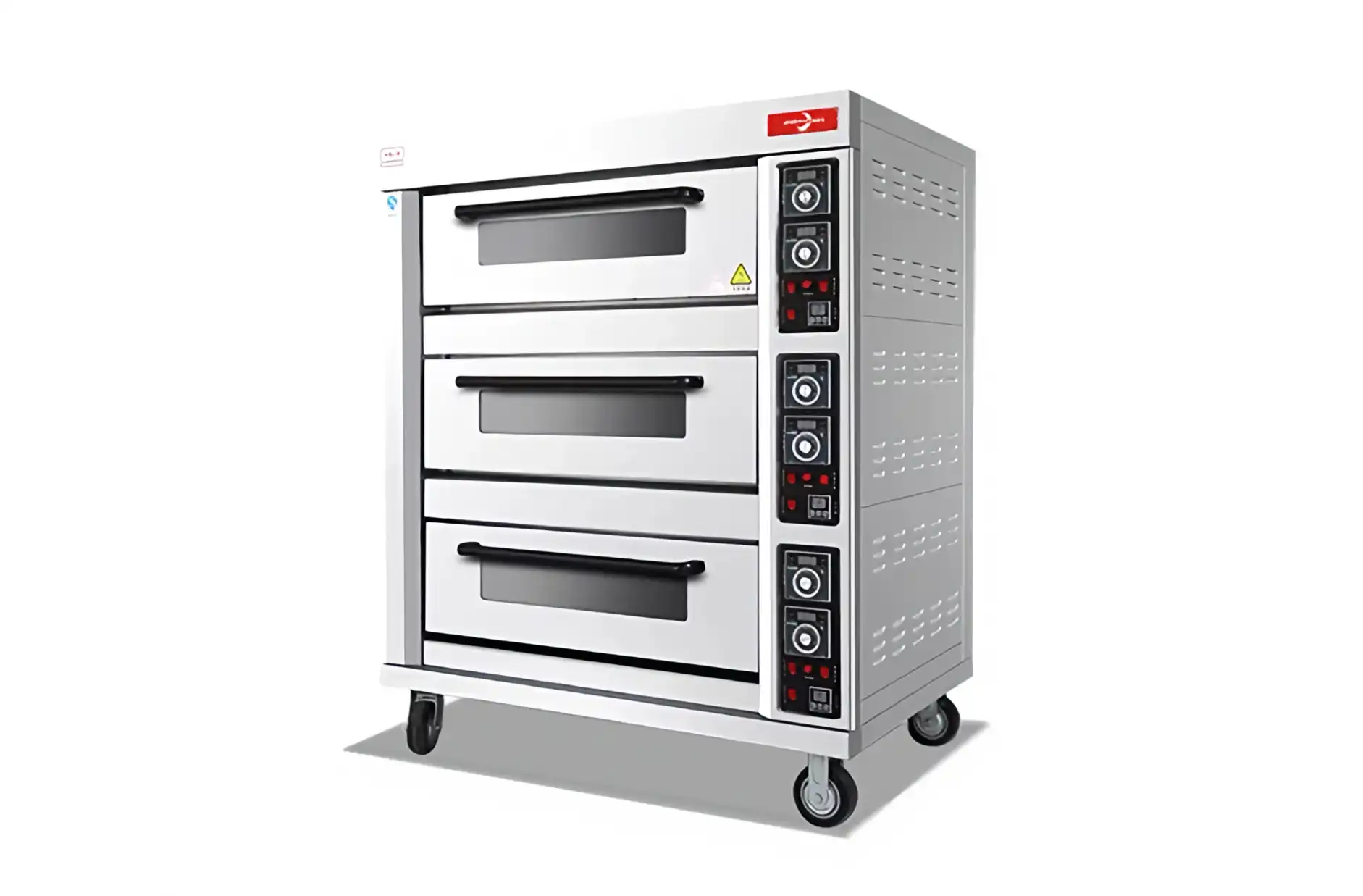
Use our SL-KXD3-9 three-deck, nine-tray electric oven as a guide. This mechanical control version, which is 1640 x 805 x 1500 mm and can handle 29.7 kW of power, shows how a small design can meet the needs of high-volume production. Each independent deck has its own settings, which lets different goods be baked at different temperatures at the same time. This directly leads to twice as much output during peak hours.
Core Features That Define a Versatile Commercial Baking Oven
Advanced Temperature Control Systems
Professional-grade equipment is different from customer options because it can precisely control the temperature. To make sure that the product stays the same after thousands of baking rounds, commercial operations need to be very accurate within very small ranges. When workers open doors or add cold products, temperature control systems must quickly adjust to changes in the thermal load so that baking conditions stay stable throughout production runs.
Our commercial deck ovens can reach temperatures ranging from room temperature to 400°C. This gives you the thermal freedom you need for both delicate cakes that need gentle heat and hearty breads that need strong baking temperatures. The mechanical control interface has easy-to-use knobs that experienced cooks like because they give them tactile input and make the system simple to use. Digital displays can break down in hot places, but traditional controls last a very long time when they are used continuously in business.
The three-dimensional balanced heating system makes sure that all deck levels get the same amount of heat. This engineering method stops the common issue of hot spots that make baking uneven and waste food. When procurement managers look at temperature control systems, they shouldn't just look at the highest temperature standards. Instead, they should focus on systems that show steady performance data over long periods of operation.
Capacity and Sizing Options for Different Production Scales
How well a bakery can meet customer needs without having to pay extra workers or work extra hours is directly related to its production capacity. With three decks and nine trays in total, this setup can handle large batches while still taking up little space. This method of vertical stacking makes the best use of space, which is important for business kitchens in cities where real estate costs have a big effect on running budgets.
Each deck works on its own, so cooks can use it to make different items at the same time or to keep the output steady by alternating baking times. A company bakery might use one deck for handmade sourdough that needs more time to bake, another for Danish pastries that need to be made quickly, and the third for specialty items during the shift. When single-chamber ovens force baking plans to happen in order, output slows down. This operating flexibility gets rid of those problems.
Standard commercial bread pans and trays can fit inside the equipment, so you don't have to buy any special bakeware. Being able to work with existing pan inventories makes buying things easier and speeds up the process of adding new tools to current routines.
Energy Efficiency: Electric vs. Gas Models
For high-volume bakeries, energy costs are a major operating expense—and the right multifunctional commercial baking oven can significantly reduce them. Electric models, like our 380V system, are easier to handle and cleaner to run than gas models, but the total cost of ownership figures are affected by how much utilities cost in your area. The design with thicker insulation cuts down on heat loss and power use, which has a direct effect on monthly running costs.
Electric ovens keep burning leftovers out of the baking area, which lowers the need for ventilation systems and makes the air quality inside better. This benefit is very important for buildings that want to get LEED approval or that work in places with strict pollution rules. The 29.7KW power rating means that the energy is being converted efficiently and is best for large-scale industrial production rather than home baking.
In places where natural gas prices are low or where limited electrical infrastructure makes high-voltage systems difficult, gas models are still the most popular. We let buying teams choose energy sources that work with their building's infrastructure and the cost of electricity in their area because our power supply setups are easily customizable. This ability to customize includes voltage specs, which make sure that the product works with electricity systems in a variety of foreign markets.
Safety Mechanisms and Hygienic Design
The people who work with commercial baking tools have to make sure that the working conditions are safe and clean enough to meet health department standards. A stainless steel structure is important for food production settings because it doesn't rust and is easy to clean. The surface of the material is not porous, so germs can't grow on it. It can also be cleaned many times with commercial-grade cleaners and disinfectants.
Overheat protection devices stop temperatures from getting too high, which could damage goods or put people in danger. These automatic shutdown features check the temps inside and cut the power off when they go above safe levels. Surface temperatures are kept low by door locks and insulated exteriors. This makes it safer for workers to be close to the equipment during production runs.
The idea of "easy-clean" design is carried out throughout the building, with surfaces and parts that can be easily removed and cleaned. When purchasing equipment, procurement managers should think about how often it needs to be cleaned, since upkeep work makes up a big part of the total cost of running the equipment over its lifetime.
Comparing Multifunctional Baking Ovens with Traditional Models
Performance Metrics: Speed, Consistency, and Efficiency
With traditional single-mode ovens, operators have to make up for the limits of the equipment by making tweaks by hand and making changes to recipes based on their experience. This variation is eliminated by a multifunctional commercial baking oven, which maintains precisely controlled baking conditions throughout every cycle. The end result is better consistency in the product, with fewer batches being refused and less waste. Financial managers also like it because they can predict production rates, which helps them figure out how much food costs.
Better baking times come from faster heat recovery after doors are opened and better wind patterns that move heat to goods more efficiently. When workers compare cycle times for similar goods between old and new multifunctional equipment, they usually find that the latter takes 15-20% less time to bake. This time savings adds up over several daily production runs, so the same workers can make more without having to work longer shifts.
The version with mechanical control is more reliable than the one with complex computer systems. Programmable interfaces make things easier, but they also add places where things could go wrong and stop output. Mechanical systems are very reliable, and repair staff can easily fix or change parts without having to use special computer diagnostic tools.
Energy Consumption and Cost Comparisons
A lot of the time, older standard ovens don't have the insulation and sealing methods that newer ones do. Walls and door locks that don't insulate well let heat escape, which leads to lost energy and higher utility bills. Because our industrial ovens have thicker insulation, this inefficiency is fixed, and heat losses are cut down even during long baking sessions.
Instead of using nameplate power rates, procurement managers should look at data on how much energy is used during full production shifts when doing total cost of ownership studies. A 29.7KW oven that is well sealed and works well may use less energy overall than a lower-rated oven that doesn't manage heat well. Less money spent on utilities each month usually covers the initial investment in efficiency within 18 to 24 months of continued operation.
When it comes to electric models, the running costs are fixed because they are tied to utility rates. However, gas prices change with the commodity markets. This stability helps with budgeting and financial planning, especially for businesses with multiple locations that want to keep costs the same across all of their locations.
Usability: Modern Interfaces and Simplified Maintenance
The mechanical interface is designed to be easy for operators to understand and use. New employees can learn how to use the basic settings in just one shift, which makes training easier than with digital systems that have a lot of menus. Temperature and timer buttons are easy to use and can be understood by people who speak different languages, which is helpful for businesses that hire people from different backgrounds.
Long-term working dependability depends on how easy it is to do maintenance. Maintenance teams can do regular checks and part changes without having to wait for a long time when equipment is made with serviceable parts and clear entry panels. For foreign buyers who live far from maker service centers, the availability of extra parts is a very important factor.
Our 20 years of experience making things have helped us make design decisions that strike a mix between ease of use and commercial-grade sturdiness. The choice of components is based on how reliable they are under high-intensity use patterns that are common in bakery chains and central kitchens. This is done instead of using new technologies that haven't been tried and could cause failures that weren't expected.
Choosing the Right Multifunctional Commercial Baking Oven for Your Business
Assessing Your Production Requirements
When planning production capacity for yourmultifunctional commercial baking oven, focus on peak demand periods rather than daily averages. When the bakery is busy in the morning, it needs tools that can handle heavy loads of work without slowing down. The nine-tray capacity spread across three separate decks gives you the freedom to increase output by turning on extra decks during times of high demand and using just one deck during times of lower demand.
A product mix study shows if separate deck controls are useful for operations. Multi-zone features are very helpful for factories that make a lot of different things that need different temperatures and amounts of time. On the other hand, businesses that only sell a few products might value different features more than deck freedom.
Total cost of ownership estimates must be weighed against budget limits. When you buy something for less money at first, it usually means higher upkeep costs, shorter service lives, and less energy economy. When making purchases, people should look at how much the tools will cost over their entire lives, not just how much they will cost to buy. This will protect long-term profits.
Evaluating Leading Manufacturers and Innovations
Manufacturing experience is directly linked to how reliable a product is and how good the service is. Companies that have made commercial baking equipment for a long time know how to handle the stresses and failures that equipment faces in real production settings. This information guides the choice of materials, the specs for each part, and the quality control procedures that decide how well the system will work in the long run.
Certification compliance makes sure that the equipment meets well-known standards for safety and efficiency. While our main customers are professionals who know what they're looking for, standards like CE, UL, ETL, and NSF provide independent proof of the quality of the design and production. International sellers should make sure that the certificates on the equipment are accepted in the countries where they want to sell it.
Customization features set makers with experienced engineering teams apart from those who only do basic assembly. The ability to change power requirements, capacity configurations, and control systems shows that production is flexible enough to meet the needs of a wide range of markets. Distributors and private label buyers can use our OEM/ODM services to make their products stand out while still using tried-and-true base designs.
After-Sales Support and Spare Parts Availability
In commercial settings where work plans can't wait for repairs that take more than one day, the costs of downtime quickly add up. How quickly a manufacturer responds to technical support questions and orders for parts decides whether small problems are fixed quickly or grow into long-lasting breakdowns. Instead of assuming help after the purchase, procurement managers should look at the support system when choosing a provider.
For equipment that works in foreign markets, having spare parts on hand is very important. When distributors keep wear parts in stock locally, fixes can be done faster than when parts have to be shipped from abroad. When looking at different manufacturers, find out about their area parts distribution networks and how long it usually takes to get popular replacement parts.
The terms of the warranty show that the company that made the product is confident in its longevity and quality. Limited guarantees that don't cover normal wear and tear are less valuable than warranties that cover both parts and work. Our quality control methods and choice of parts are meant to keep failure rates as low as possible, but full guarantee support gives buyers extra peace of mind when they make big purchases.
Practical Tips for Operation, Cleaning, and Maintenance
Optimizing Temperature Settings for Various Products
To achieve desired results, each product requires a unique temperature profile—easily managed with amultifunctional commercial baking oven. If you want the outside of your bread to be crispy, start baking it at a high temperature and then lower the temperature as you finish. For delicate cakes to get a structure without burning too much, they need softer, longer-lasting heat. The wide temperature range, from room temperature to 400°C, lets this equipment meet all of these different needs.
For each product, operators should write down exact temperature settings, deck spots, and time in standard recipes. This paperwork makes sure that everything is the same between shifts and lets new employees get the same results as experienced cooks. When goods don't give the same results every time, using calibrated thermometers to check the temperatures helps figure out if the problem is caused by machine drift or changes in the recipe.
The way heat is spread depends on where the deck is placed and how densely the products are loaded. Rotating the trays during baking cycles helps even out small changes in airflow, but well-designed ovens like our three-dimensional balanced heating systems make it so you don't have to make many changes in the middle of a cycle. Observing and writing down your equipment's temperature properties will help you make better products while cutting down on waste.
Establishing Effective Cleaning Protocols
Daily cleaning routines stop building that hurts performance and raise health concerns. The stainless steel makes it easier to clean, but you need to use the right cleaners to get rid of the waste without hurting the surfaces or leaving behind chemicals that could get on other goods. Non-abrasive cleaners made for commercial food tools clean well and keep the finish of the material.
Removable parts should be cleaned thoroughly at times that are based on how often they are used and how the product is made. When compared to lean bread formulas, sugary goods leave behind more aggressive waste that needs to be deep cleaned more often. Setting cleaning plans based on operating experience instead of random dates and times makes sure that the area is clean without spending too much on labor.
Corrosion avoidance is especially important in baking settings with a lot of humidity. Equipment lasts longer if it is properly dried after being cleaned and if seals and gaskets are checked on a regular basis. Corrosion protection is built into commercial-grade building to last, but regular maintenance practices make the most of this built-in benefit.
Routine Inspection and Troubleshooting
With preventive maintenance, issues in yourmultifunctional commercial baking ovenare detected before they cause production stoppages. Every week, the door seals, control buttons, and heating elements should be looked at visually, and any damage should be recorded and fixed right away. Mechanical parts like locks and doors need to be oiled from time to time with food-grade oils that are safe for high temperatures.
Using different thermometers to check the accuracy of the temperature helps find calibration shifts. When baking results change even though the recipe is always followed, measuring the temperature gives you objective information to figure out if the equipment's performance has changed. Trained techs can use the adjustment features of mechanical control systems to get back to the original specs.
Uneven baking can mean that there are problems with the heating element or airflow, longer preheating times can mean that the insulation is wearing down or there are electrical issues, and changes in the way the control responds can mean that the mechanical parts are wearing out. Keeping records of how equipment works and what repair tasks are done can help you find trends that let you know when parts need to be replaced before they break.
Conclusion
To choose amultifunctional commercial baking oven, you need to carefully consider the features that affect how well it works, how consistent the products are, and how much it costs to run in the long run. Precision temperature control, the right capacity scaling, energy-efficient design, and strong building are the most important traits of equipment that can meet tough business needs. Over the past 20 years, we've been making commercial baking equipment. As a result, we've come up with designs that are both easy to use and perform at an industrial level. These designs work well in chain bakeries, food processing facilities, and central kitchens. The mechanical control method is reliable and simple to use, and current features such as separate deck operation and three-dimensional heating give modern bakery operations the performance flexibility they need.
FAQ
How do multifunctional ovens compare to traditional models in energy efficiency?
Because they have better insulation, better door seals, and better heat transfer systems, multifunctional commercial baking ovens usually use 20 to 30 percent less energy than older, more traditional models. The thicker insulation design cuts down on heat loss, and the fact that each deck can be operated separately keeps energy from being wasted on capacity that isn't being used when production is low.
Can I customize a commercial oven to meet specific production requirements?
Customization choices include changing the voltage, the way the power source is set up, the capacity, and the way the control system works. With our OEM/ODM services, buyers can change the way equipment looks, the useful sections it has, and its technical specs to fit their facility's infrastructure and the way they run their business. This adaptability is especially helpful for foreign buyers who need to change tools to fit local electrical standards and market preferences.
What warranty and support services should I expect from quality manufacturers?
Reputable makers offer full guarantee coverage that includes both parts and labor, with clear terms about how long the coverage lasts and what it doesn't cover. Responding quickly to technical support requests, having spare parts available through regional distribution networks, and having access to experienced service techs are some of the things that set makers who want to build long-term relationships with customers apart from sellers who are only interested in making one-time sales.
Partner with Undermoon for Reliable Commercial Baking Solutions
Based on 20 years of experience making electric and gas multifunctional commercial baking oven systems, Undermoon is a specialist in the commercial baking equipment business. Our standard production facilities and strict quality control procedures make sure that every unit meets the high performance standards needed by chain bakeries, food preparation companies, and hotel groups. As a reliable multifunctional commercial baking oven maker, we offer a wide range of customization options, such as changing the voltage and gas type and private marking for OEM/ODM products. This lets wholesalers and end users choose equipment that is perfectly matched to their needs. Email our team at undermooncn@gmail.com to talk about how our deck ovens, convection systems, and other specialized baking solutions can help you make more with less while still giving your business the sturdiness and stability it needs.
References
1. Smith, J. (2021). Commercial Baking Equipment: Selection and Specification Guide. Culinary Technology Press.
2. Anderson, M. & Roberts, P. (2022). "Energy Efficiency in Professional Bakery Operations," Journal of Foodservice Technology, 18(3), 145-162.
3. Thompson, R. (2020). Industrial Baking Systems: Design, Operation and Maintenance. Food Engineering Publications.
4. Martinez, L. (2023). "Temperature Control Precision in Multi-Deck Baking Ovens," Commercial Kitchen Equipment Review, 12(1), 34-48.
5. Chen, W. & Davis, K. (2022). Bakery Production Management: Equipment and Workflow Optimization. Hospitality Industry Press.
6. Wilson, S. (2021). "Comparative Analysis of Electric vs. Gas Commercial Ovens," Food Processing Equipment Quarterly, 29(4), 78-91.
Online Message
YOU MAY LIKE
High quality furniture manufacturer


