
Oct 15, 2026
Why Choose a Single Deck Commercial Bread Baking Oven?
A single-deck commercial bread-baking oven is one of the most important investments a bakery can make because it directly affects product quality, energy efficiency, and long-term profitability. When purchasing tools, operations directors and procurement managers have to make tough choices that balance current budget limits with long-term costs and output needs. The right oven choice affects not only the taste and texture of baked goods but also how often they need servicing, their running costs, and their operational flexibility.
When it comes to commercial baking tools, single-deck commercial bread baking ovens are ideal for companies that want accuracy and dependability without the hassle of bigger systems. Over the past 20 years, we've seen how these specialized units have changed from simple heating rooms to high-tech baking environments with advanced temperature controls, thermal insulation systems, and long-lasting construction made for continuous business use. When procurement teams know the technical and operational benefits of single-deck designs, they can make choices that meet both current production needs and plans for future business growth.send inquiry.
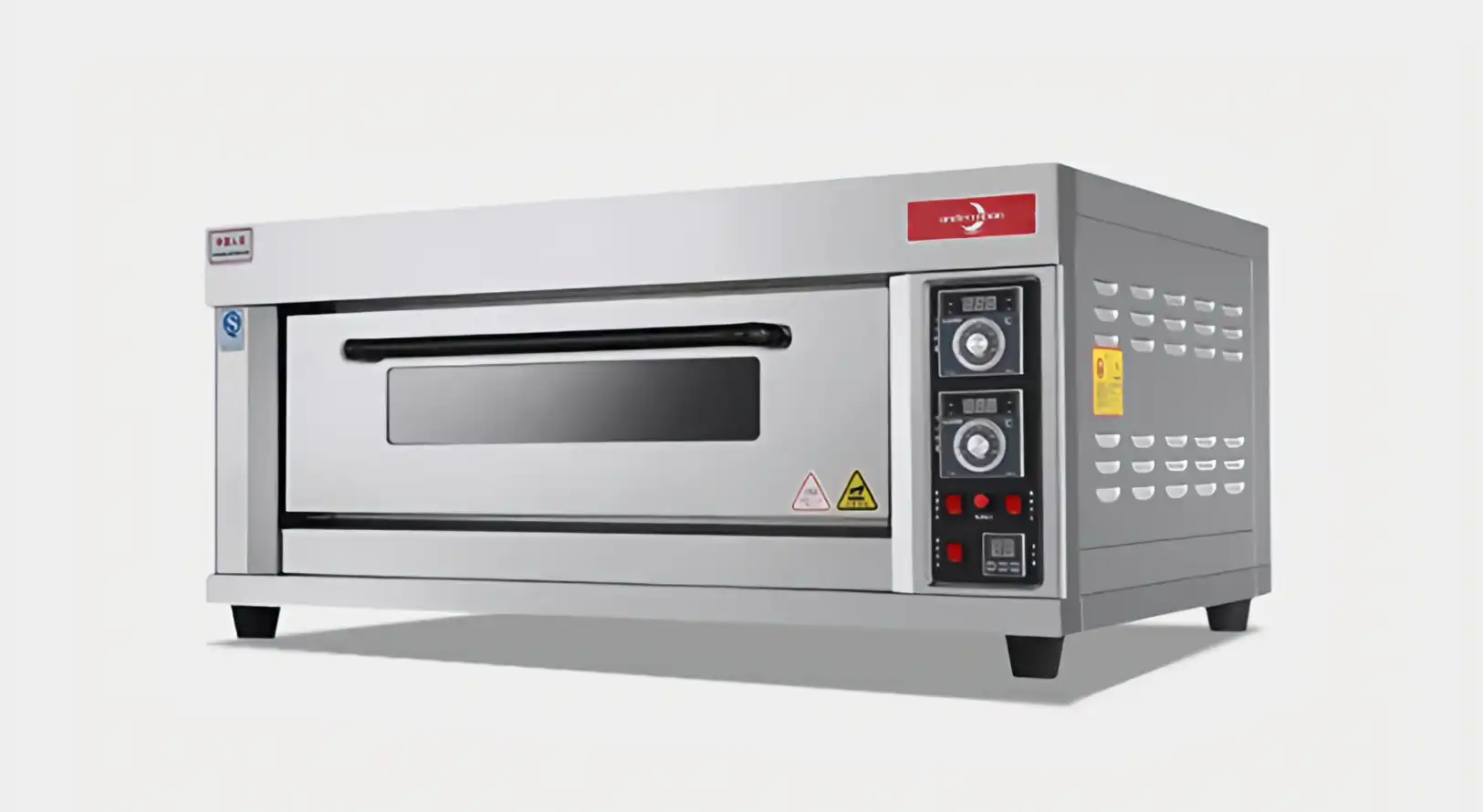
Understanding Single Deck Commercial Bread Baking Ovens
Core Design and Operational Principles
A single-deck commercial bread-baking oven features one sealed baking chamber designed to maintain precise thermal conditions throughout the baking process. There are separate upper and lower heating parts in the basic design. These are usually powered by far-infrared technology that spreads even heat across the baking area. This style is very different from multi-deck ovens, which stack many rooms vertically, or convection ovens, which use fan systems to move hot air around.
The thermal physics behind these ovens is all about making even heat zones so that there are no hot or cold spots in the baking room. Premium types have high-density mineral wool insulation that is at least 100 mm thick. This keeps 95% of the heat inside and keeps the outside areas cool to the touch. This method of insulation cuts down on wasted energy and makes business kitchens safer places to work where people are close to machines.
Technical Specifications and Material Composition
Professional single-deck commercial bread-baking ovens have 304-grade stainless steel exteriors that don't rust and strengthened aluminized steel inner rooms that can handle being heated and cooled many times. The temperature range is usually between 20°C and 400°C, which makes it useful for various baking methods. These units can reach 200°C in just 15 minutes thanks to their fast pre-heating features. This means that there is little downtime between production runs.
Our model SL-KXD1-2 demonstrates this design theory with its 1-deck, 2-tray layout, dimensions of 1220x805x560mm, and power consumption of 6.6KW at 220V/380V. The mechanical control panel makes it easier to use while still allowing exact temperature control, so baking workers of all skill levels can operate it. This small form makes the best use of space in business settings, where renting or buying every square meter of kitchen space is expensive. These features make a single-deck commercial bread baking oven ideal for bakeries seeking consistent baking performance and lower operating expenses.
Differentiation from Alternative Oven Types
The static heat setting in single-deck commercial bread baking ovens makes them stand out from forced-air convection systems, which produce entirely different baking results. Because there are no fans moving the air, delicate items like soufflés and cookies can rise without disturbing the surface. On the other hand, crusty breads get a thick, caramelized crust that makes them taste handmade.
Multi-deck ovens hold more food because they stack vertically, but keeping the temperature even in all the rooms can be hard, especially when baking at the same time. Each deck may have small changes in temperature, which means that only experienced workers should move goods or change the timing. Such caution isn't necessary with single-deck designs, which give consistent results that make teaching staff and quality control easier.
Benefits of Choosing a Single-Deck Commercial Bread Baking Oven
Superior Baking Consistency and Product Quality
A single-deck commercial bread-baking oven delivers superior baking consistency through its controlled thermal environment. The upper and lower heating parts can be controlled separately, which lets workers fine-tune the baking balance and keep the tops from getting burned while making sure the bottoms get plenty of heat. This "baking balance" feature is especially useful when making different types of products that need different levels of heat.
Testing for temperature consistency using 9-point thermocouple mapping shows that there is a difference of less than ±5°C across the baking area. This means that the oven's results are the same no matter where it is placed. This level of uniformity gets rid of the trash that comes from uneven baking and cuts down on the need to switch out products in the middle of a cycle. This makes operations more efficient while still meeting quality standards.
Energy Efficiency and Operational Cost Reduction
One of the biggest reasons to choose a single-deck commercial bread baking oven is its outstanding energy efficiency. The thermal retention qualities keep the chamber temperature stable with little energy input. This saves money on electricity costs over the life of the equipment. Current single-deck units can save 20–30% on energy costs while still baking better, especially when compared to older oven designs or models that aren't well sealed.
When compared to multi-deck systems that heat several chambers at the same time, the small single chamber design needs less total energy to reach and keep the working temperature. This efficiency is especially clear during partial-capacity production runs, since single-deck commercial bread baking ovens don't waste energy heating rooms that aren't being used in bigger systems.
Flexibility for Specialized and Artisanal Production
A single-deck commercial bread-baking oven is particularly suitable for artisan bakeries and specialty bread production. Artisan bread makers really like the steady heat environment that makes them think of baking on a stone fire. This is important for getting the "oven spring" that gives sourdough and baguettes their characteristic open crumb structure. Optional steam injection systems make the process even better by controlling the wetness that is needed for professional-level crust growth.
Single-deck setups make batch baking easier, which lets workers handle different types of products throughout the day by changing temperatures and time between batches to fit different recipes. This operating freedom allows for a wide range of product menus without the need for multiple specialized ovens. This makes the best use of tools while reducing the need for capital investment.
Simplified Maintenance and Extended Equipment Lifespan
Another major advantage of a single-deck commercial bread baking oven is simplified maintenance and a longer service life. Because there are fewer working parts, there are fewer places where something could go wrong. This helps explain the very low failure rate of 0.3%, which is the result of strict quality control during production.
Routine maintenance jobs, like cleaning the baking rooms, checking the heating elements, and making sure the temperature is correct, are still straightforward for bakery staff to do. The stainless steel design doesn't rust and makes it easy to clean, both of which are important for keeping food safe and making tools last longer than usual in the industry.
These useful benefits make strong value arguments for procurement teams looking at long-term equipment purchases. The simpler design not only lowers the cost of maintenance but also cuts down on the specialized technical knowledge needed for fixing. This means that you don't have to pay for expensive service contracts, and practical problems can be fixed faster.
Comparing Single-Deck Ovens with Other Commercial Bread-Baking Solutions
Capacity and Footprint Considerations
By stacking several baking rooms vertically, multi-deck ovens can hold more food at once. This makes them popular in high-volume production facilities where increasing complexity is necessary to achieve the most work done. However, this vertical arrangement creates practical problems, such as uneven heating between decks and the physical demands of loading and removing goods at different heights. Single-deck commercial bread baking ovens keep their working heights at optimal levels that keep workers from getting tired or hurt while doing the same tasks over and over.
Because they use forced air movement, convection ovens can bake things quickly. This makes them particularly effective for things like cookies and cakes that need airflow. The turbulent air environment isn't as good for fragile items that need light heat or crusty breads that need a dry surface to make the best top. Single-deck commercial bread baking ovens provide a controlled environment for unique goods that must be priced higher than others in a competitive market.
Energy Consumption and Thermal Performance
The heat efficiency study indicates that different types of ovens have different ways of working. Multi-deck systems use a lot of energy to heat multiple rooms at the same time, which is inefficient when only using a portion of their capacity. For convection stoves to work, the fan has to run all the time, which adds to the overall energy use. A single-deck commercial bread-baking oven uses energy more efficiently because it concentrates all heating power in one insulated chamber. This allows the temperature to return quickly after the doors open and close.
Professional single-deck models show that the temperature returns to the set point within 120 seconds of the door being opened, keeping output going while the machine is running continuously. The ability to quickly rebound is due to high-mass heating elements that store thermal energy. This keeps temperature changes to a minimum, which keeps products consistent and shortens baking times.
Manufacturer Landscape and Innovation Trends
In 2026, the industrial oven manufacturing industry will continue to evolve with the addition of better thermal control systems, insulation materials, and digital tracking tools. Leading makers set their products apart by using their own designs for heating elements, more advanced control interfaces, and full insurance support that shows they trust their products to last.
We've been making business baking tools for 20 years, so we've perfected our production methods to make sure that the quality of every unit is the same. At every step of the manufacturing process, from choosing the parts to the final plant check, our standardized production base follows strict quality control rules. This methodical approach gives buying managers the stable and reliable products they look for when choosing long-term equipment sources to work with.
Customer feedback always shows how important it is to have quick expert help and a collection of spare parts that are easy to get. The best supplier ties combine high-quality production with easy-to-reach after-sales service. This way, when a repair needs doing, the business experiences little downtime. We understand these important factors when it comes to purchasing, which is why we are committed to keeping all extra parts available and giving expert technical advice.
How to Choose the Right Single-Deck Commercial Bread Baking Oven for Your Business
Analyzing Production Requirements and Product Mix
The selection process starts with an honest look at the current and planned production numbers, taking into account both the daily needs for output and times when demand is highest. Single-deck commercial bread baking ovens work well for bakeries that make 100 to 500 units of craft or specialty goods every day and need to ensure that the quality is consistent so they can focus on volume. For operations that need to make many things, they might need more than one single-deck unit or a different setup that works best for mass production.
Product variety research is also essential because different baked goods need different temperatures. For crusty artisan breads, baking at a high temperature with steam injection is best. For delicate desserts, you need precise temperature control and gentle heat spread. By comparing your product line to the oven's capabilities, you can be sure that the equipment you choose meets the needs of the recipe and the quality standards.
Technical Feature Evaluation
Modern single-deck commercial bread baking ovens have many technical features that you should carefully consider. Digital control systems can store recipe details through scripting, which makes sure that everything is the same between shifts and cuts down on the need for user training. Mechanical controls, like those on our SL-KXD1-2 model, are easy to use and have proven reliable. This is especially useful in settings where keeping things simple cuts down on training needs and maintenance work.
Controlling the upper and lower heating elements separately lets workers change the baking balance for different items, which stops common problems like tops that are burnt or sides that aren't cooked enough. This feature is necessary when making different types of products in the same oven, making the equipment more useful and increasing its value.
Quality of thermal insulation has a direct effect on how much energy is saved and how well the outside temperature is controlled, which has an effect on both running costs and cooking safety. Specification sheets should list the thickness of the insulation and the amount of heat retention. High-end models with high-density mineral wool construction achieve 95% retention.
Procurement Strategy and Supplier Assessment
When making a budget, it's important to think about the total cost of ownership as well as the initial buy price. More expensive ovens that are of higher quality often have better lifetime value because they use less energy, need less upkeep, and last longer. To accurately compare different pieces of equipment, you need to figure out how much they will cost to run over five years, taking into account things like energy, repairs, and expected downtime.
Evaluation of suppliers includes more than just product specs. It also looks at how well they can make the product, their quality control systems, and their after-sales support infrastructure. Procurement managers should look into the standards of the production site, whether the certifications are being followed, and whether there are any customer examples that back up the claimed performance characteristics. Our factory keeps up with certifications like CE, ETL, and NSF compliance, which show that we follow the international quality and safety standards that professional buyers expect.
Another important thing that a provider should have is the ability to customize, especially for businesses that need to meet specific voltage requirements, control interface preferences, or size changes to fit existing kitchen plans. Our OEM/ODM services are very flexible, so we can make solutions that are exactly what you need. For example, we can change the voltage for foreign markets or set up private label programs to help our distribution partners.
Maintenance Tips and Common Issues with Single-Deck Bread Baking Ovens
Preventive Maintenance Protocols
Setting up regular repair schedules stops most operating problems before they happen and makes equipment last much longer than the manufacturer's standard expectations. As part of daily cleaning, flour dust and baking leftovers should be carefully removed from all inner surfaces. This will keep them from building up and making it harder for heat to circulate and creating a fire risk. The stainless steel design makes this cleaning process easier because it doesn't rust after being cleaned many times.
Once a week, check the heating element for discoloration or damage that could mean it's about to break. Regular checks of the door seal's soundness are needed because worn-out seals reduce heat efficiency and lengthen baking times. Heating loss causes energy waste and inconsistent products. Replacing the gasket is an easy way to stop this from happening.
Using separate thermometers to check the numbers on the control panel every month, calibration verification makes sure that the temperature accuracy stays within acceptable limits. Temperature shifts occur slowly, and you may not notice them until product quality suffers. Preventive adjustment keeps the accuracy needed for repeatable recipes and consistent results.
Troubleshooting Common Operational Problems
The problem that is noted most often is uneven baking, which is usually caused by a broken heating element, a damaged door seal, or bad filling techniques that block heat flow. Systematic analysis starts with testing the heat pattern of an empty oven to see if the problems are caused by broken equipment or bad work habits that need to be fixed by the staff.
If the temperature doesn't return quickly after opening and closing the door several times, it could mean that the heating element isn't working well or that the insulation is wearing out. Although some temperature drops are normal, recovery times longer than what the maker recommends are a sign that repair needs to be done and should be looked at by a professional. When workers try to make up for longer recovery times by changing baking times, the quality of the products they make suffers.
Even when you use high-quality parts, electrical control failures can still happen. These usually show up as temperature controls that don't work or heating that goes up and down randomly. Professional service is needed to fix these problems, which shows how important it is to choose sellers with active technical support networks and large spare parts inventories. Our dedication to easy access to after-sales help ensures that technology problems are fixed quickly, minimizing downtime for operations.
Professional Service Engagement
Trained kitchen staff can still handle routine upkeep, but sometimes you need specialized technical knowledge. Changing a heating element involves working with electrical systems, which requires following safety rules and having the right technical knowledge to make sure the job is done right. For control system troubleshooting, you need to know more about electrical parts than the average bakery worker.
Building ties with skilled service providers before problems happen works much better than trying to fix things quickly when something goes wrong. Many makers offer service plans that include regular preventative maintenance visits and faster help for operating issues. When buying equipment, it's important to look at these service plans to make sure that the purchase comes with a full support system.
Conclusion
A single-deck commercial bread baking oven is an excellent choice for bakeries seeking reliable performance, energy efficiency, and consistent product quality. When operations directors and procurement managers look at industrial baking equipment, these specialized units get top marks for precise heat control, energy efficiency, and ease of upkeep. The stable temperature climate allows for higher product quality, which is necessary to stand out from the competition. Simplified mechanical design lowers both maintenance expenses and operating complexity. By carefully looking at production needs, technical specs, and source abilities, bakery operations can find equipment partnerships that help them grow and make the high-quality goods that make commercial baking businesses successful.
FAQ
What temperature range does a single-deck commercial bread baking oven offer?
Professional single-deck commercial bread baking ovens usually have temperature ranges between 20°C and 400°C, which means they can be used for a wide range of baking tasks, from soft proofing to high-temperature bread baking. This wide range can handle everything from delicate cakes that need mild heat to craft breads that need very high temperatures for the crust to form properly. Because it can work at a wide range of temperatures, it removes the need for multiple specialized ovens. This design makes the best use of tools and room.
Is a single-deck commercial bread-baking oven more energy efficient than a multi-deck oven?
When only half full, single-deck commercial bread baking ovens usually use less energy than multi-deck systems because they only heat the used space. Because a smaller, better-insulated room has more heating power, it takes less energy to reach and maintain the right temperature. When production is at full capacity, multi-deck ovens may be more efficient because they produce more per unit of energy. However, this advantage is lessened when you consider that single-deck designs are simpler and better at maintaining quality.
Can a single-deck commercial bread-baking oven bake different products at the same time?
Since single-deck commercial bread baking ovens maintain a consistent environment inside the chamber, products that need to be baked at the same time must have similar temperature and humidity requirements. The upper and bottom heating controls are separate from each other, so workers can change the amount of heat to keep the surface from burning while still baking the food all the way through. Multiple single-deck units may be better than trying to accept settings in a single chamber for operations that need very different baking conditions for different tasks to be done at the same time.
Partner with Undermoon for Your Commercial Baking Equipment Needs
Undermoon has been making specialized products for 20 years, and we use that experience in every single-deck commercial bread-baking oven we make. We combine tried-and-true tech with quick customer service that procurement managers appreciate. Our standard production plant uses strict quality control at every stage of production, which is shown by the fact that our 0.3% failure rate is the lowest in the business. As a seasoned provider of single-deck commercial bread baking ovens, we provide a wide range of customization options, such as voltage adaptation, control system preferences, and OEM/ODM programs that support distributor ties around the world. Our expert team is ready to help you with equipment specifications, installation, and ongoing operating support to make sure that your investment keeps working well for as long as it's supposed to. Get in touch with us right away at undermooncn@gmail.com to talk about how our business baking options can help you meet your quality and operational needs.
References
1. Baker, J.M. (2023). Commercial Baking Equipment Selection: A Procurement Guide for Professional Kitchens. Culinary Technology Press.
2. Richardson, P.L., & Thompson, K.A. (2022). "Thermal Efficiency Analysis in Commercial Deck Ovens," Journal of Food Service Technology, 18(3), 145-162.
3. National Restaurant Association. (2024). Commercial Kitchen Equipment Standards and Best Practices. Washington, DC: NRA Publications.
4. Chen, W.H. (2023). "Comparative Performance Metrics of Single versus Multi-Deck Baking Systems," International Journal of Hospitality Equipment Management, 12(2), 78-94.
5. European Committee for Standardization. (2023). Commercial Catering Equipment - Electric Ovens: Safety and Performance Requirements (EN 60335-2-42:2023). Brussels: CEN Publications.
6. Morrison, R.T. (2024). Artisan Bread Production: Equipment, Techniques, and Quality Control. Professional Baking Institute Press.
Online Message
YOU MAY LIKE
High quality furniture manufacturer


